You put work into the video and the view count barely moves. Changing everything would feel productive, but it would also hide what was wrong.
YouTube's help pages explain what Studio can measure. They do not reveal why your particular upload lost a recommendation.
So use the checks below to pick one specific change, or to decide that the honest answer is still "not enough evidence". This is for regular videos; Shorts need different feed checks.
Quick answer
- First ask whether the video is actually low against your own channel. In our study, 17.7% of long videos landed under half their channel's normal, so a weak-looking upload is often ordinary.
- In YouTube Studio, check packaging first, then impressions, the number of times your thumbnail was put in front of someone, then retention, how much of the video people actually watch. Low views alone cannot identify which needs fixing.
- A video stuck at 10 views has too little viewing evidence for a confident retention diagnosis. Check visibility and reach before judging the edit.
- YouTube's retention data usually takes 1 to 2 days to process. A missing graph immediately after upload does not mean nobody stayed.
Check your own video: paste the link in the free outlier checker. It shows the maths and takes a second.
- A Video Can Look Low And Still Be Normal For Your Channel
- A Low-View Video Needs A Decision Tree, Not Every Fix
- Weak Packaging Needs A Fair Click-Through Comparison
- A Video Not Getting Impressions Needs A Reach Check
- Weak Retention Shows Where A Low-View Video Loses People
- YouTube Views Stuck At 10 Do Not Identify The Cause
- A Viewer Needs A Clear Reason To Choose Your Video
- Conclusion (What I Would Do)
- FAQ: Low YouTube Views
A Video Can Look Low And Still Be Normal For Your Channel
"Low" only means something against your own channel. Paste your channel into the channel analyzer, or one video into the outlier checker.
Each returns a score: the video's views divided by the median (the middle value) of your recent uploads of the same format. The tools use the ten before it by default. A video at 0.8x your median is normal, not broken.
In our outlier study, 16,331 long videos from 388 channels were scored this way. The table shows how they landed, computed from the study data.
| Score against the channel's own normal | Share of long videos |
|---|---|
| Under 0.5x (less than half the usual) | 17.7% |
| Under 0.8x | 36.2% |
| 0.8x to 1.25x (ordinary) | 25.6% |
| 5x or more (an outlier) | 8.3% |
The median score was 1.0x. I think the first row matters most for a worried creator: roughly one long video in six lands under half its channel's normal.
So, going by the study table above, one soft upload is not yet a problem to solve. If your score sits near 1.0x, stop here. If it stays under 0.5x across several uploads, run the checks below.
A Low-View Video Needs A Decision Tree, Not Every Fix
A YouTube video not getting views needs a diagnosis of where viewers stop: choosing it, encountering it, or watching it. Packaging is your title and thumbnail together, including the idea they promise.
Impressions are counted thumbnail appearances. Retention measures how much of the video people watch. Packaging-first is a checking order, not YouTube's distribution formula.
Open The Video, Not Just Your Channel Total
On desktop, open Studio → Content → your video → Analytics → Reach. Keep impressions and impressions click-through rate visible together.
Click-through rate, or CTR, is the percentage of counted thumbnail appearances that produce a view.
YouTube's funnel report connects impressions to views and watch time, the total time spent watching. Write down your date range, and compare uploads at the same age, not yesterday's video against an old one's lifetime total.
Follow The Branch That Fits
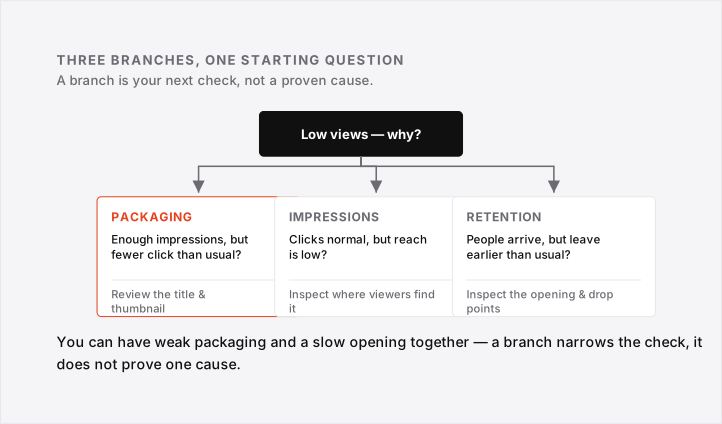
- Enough impressions to compare, but fewer people click than usual? That points at packaging, so review the title and thumbnail. If impressions are scarce, hold your judgement.
- Clicks look normal, but reach is low? That points at impressions, so look at where viewers find the video, its topic and any restrictions.
- People arrive but leave earlier than usual? That points at retention, so look at the opening and the exact moments where viewing drops.
A branch gives you a next check, not a proven cause. You can have weak packaging and a slow opening together.
Weak Packaging Needs A Fair Click-Through Comparison
Weak packaging is a fair guess when people see your video but choose it less often than comparable uploads. A low CTR alone is not enough, because who saw the thumbnail matters.
What counts as a good CTR, and why a lower rate can still mean more views, is covered in what is a good CTR on YouTube. Here I only care about comparing like with like.
Compare The Same Traffic Source
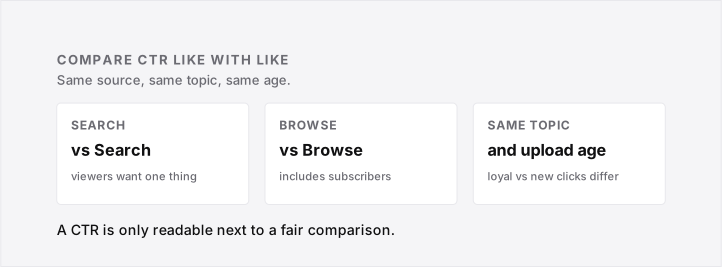
A traffic source is where a viewer found you. In Advanced Mode, inspect the traffic-source breakdown and compare CTR where available.
- Compare Search with Search, where viewers are actively looking for something specific.
- Compare Browse features with Browse, which includes Home and subscriptions, not just strangers discovering you.
- Compare similar topics and upload ages. A loyal audience and a new audience may click differently.
If comparable CTR is genuinely weak, test a clearer promise. The thumbnail tester previews a new thumbnail in YouTube's layouts first.
A Video Not Getting Impressions Needs A Reach Check
A video not getting impressions has too few recorded opportunities to earn a click. That can reflect limited demand, competition or distribution restrictions. It does not automatically prove that your thumbnail failed.
YouTube counts an impression when at least 50% of the thumbnail is visible for more than 1 second on eligible surfaces. External websites and notifications are excluded.
Separate Availability From Audience Demand
Start in Studio → Content. Confirm the intended video is public, not private, unlisted or still scheduled. Inspect the Restrictions column and open any notice rather than guessing what it means.
Then return to Analytics → Reach and inspect how viewers find the video:
- For search traffic, read the actual search terms on the Reach tab. Does your title answer them, and does the video deliver?
- For suggested videos, look at the videos sending viewers. Would somebody watching those also want yours?
- For browse features, compare with similar uploads. This category includes subscriptions, so it does not prove strangers saw you.
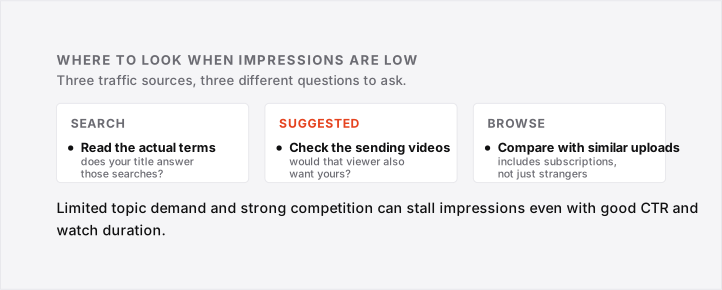
YouTube's explanation names limited topic demand and strong competition as reasons impressions may stall even with good CTR and watch duration.
For a narrow topic, try a broader framing only if the video genuinely answers the broader question. Otherwise, change the next video's idea, not this one's promise.
Weak Retention Shows Where A Low-View Video Loses People
Weak retention means viewers watch less than the comparison suggests they should. Find the moment they leave before deciding the whole video needs replacing.
Open video Analytics → Engagement → Audience retention. YouTube's retention guide says processing usually takes 1 to 2 days. Some highlighted moments require a video at least 60 seconds long with at least 100 views.
Read The Opening Before The Average
The Intro measure reports how many viewers remain after the first 30 seconds. Watch that opening beside the title and thumbnail. Does it begin delivering the promise, or ask for patience?
Use Studio's typical-retention comparison where available. YouTube describes it as your 10 latest videos of similar length.
Match The Shape To A Specific Check
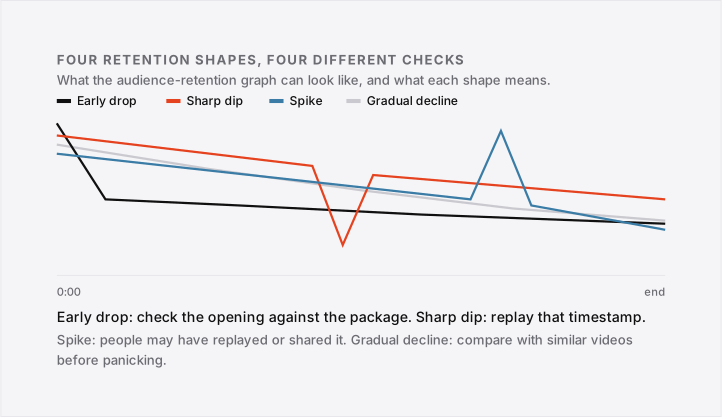
- An early drop means you should check whether the opening matches the package. Cut setup from your next script, or fix a misleading title now.
- A sharp dip is worth replaying at that timestamp. People may have skipped the passage or left; the graph cannot say which.
- A spike may be a replay or a share. It may also be a confusing explanation people needed twice.
- A gradual decline should be compared with similar videos before you panic. YouTube says videos generally taper off.
High CTR with weak viewing can mean an overpromising package. Fixing retention may mean attracting the right viewer, not adding faster cuts.
YouTube Views Stuck At 10 Do Not Identify The Cause
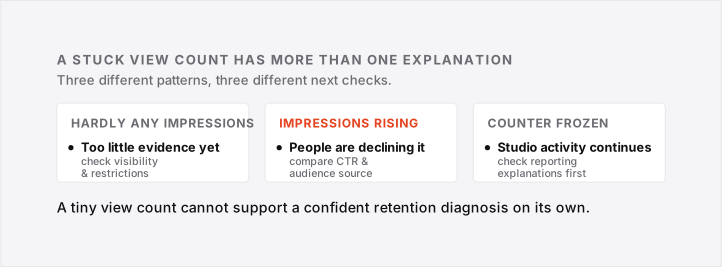
YouTube views stuck at 10 tell you almost nothing about why the video stalled. Separate a small audience from a delayed counter before changing the upload.
Check What Actually Stopped
- With hardly any impressions, confirm visibility, restrictions and topic clarity. There may be too little evidence to judge the package.
- With impressions rising and views barely moving, compare CTR and audience source. People may be seeing the offer and declining it.
- With a frozen public counter but Studio activity continuing, check the reporting explanations before assuming distribution stopped.
YouTube's engagement-metrics page says it may slow down, freeze or change a metric count while verifying accuracy, and that Realtime only estimates potential view activity.
No source I found gives a deadline after which a low-view video is permanently dead. YouTube's performance FAQ describes older videos gaining interest when topics or audience behaviour change.
I would keep the upload unless it has wrong information. Deleting and reuploading is not a diagnosis.
A Viewer Needs A Clear Reason To Choose Your Video
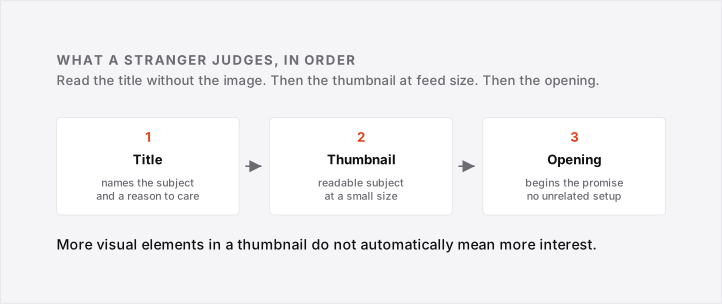
A viewer chooses a promised experience, not the hours you spent editing. Before changing the thumbnail's colours, check whether a stranger can understand that promise.
Read the title without the image. Then view the image at feed size. Then watch the opening without giving yourself credit for what comes later.
Test A Different Promise, Not Just A Different Colour
A/B testing shows alternative packages to different viewers at the same time. Where available, YouTube's native tool judges watch time, not just clicks.
If views rise after you change a thumbnail by hand, demand and traffic may also have moved, so timing alone does not prove cause. Our thumbnail-change research covers this.
I think the useful question is whether the package attracts somebody the video can satisfy. An exaggerated promise can lift clicks while hurting the opening.
Conclusion (What I Would Do)
Pick one low-view video and run the order: packaging, then impressions, then retention. Change one thing at a time so the next result can be read.
- Get the video's score from the channel analyzer first. Under 0.5x across several uploads is worth chasing; around 1.0x is normal.
- Note the date range, then pull the video's impressions, CTR and traffic sources on the Reach tab.
- Compare them with comparable uploads from your channel, same source where possible.
- If retention data exists, check the Intro and typical-retention comparisons before editing the script.
- Give each change time to collect its own evidence before judging it.
If the evidence is thin, I would treat "not enough evidence yet" as the finding and return after the next upload.
FAQ: Low YouTube Views
How long should I wait before changing a low-view video's thumbnail?
Until you have enough impressions to compare CTR fairly and enough viewing to judge retention. YouTube's documentation gives no universal waiting period.
Does changing the thumbnail or title fix a video nobody sees?
Not by itself. Reach and CTR answer different questions, so if impressions are scarce, check availability, restrictions and topic demand first.
Is a 2% click-through rate bad?
By itself, it is unreadable, because who saw the thumbnail and where changes the comparison. See what is a good CTR on YouTube for how to read it.
How many views do I need before retention numbers mean anything?
YouTube states no universal minimum. Its retention guide says data takes 1 to 2 days to process, and some highlighted moments need a video of at least 60 seconds with 100 views.
Can a video with low views still recover later?
Possibly. YouTube's performance FAQ describes older videos gaining interest when topics or audience behaviour change. A low count records the past; it does not exclude the video permanently.
Does YouTube suppress small channels' views?
I found no YouTube documentation saying that. Low views have measurable parts: availability, audience and viewing behaviour. Where evidence is missing, "not enough evidence" is the defensible answer.