A video can get clicks and still stop growing. That doesn't mean YouTube ignored it, or that you need a different upload time.
What YouTube says it predicts and what your numbers can prove are two different things. This piece keeps them apart.
Quick answer
- YouTube says recommendations find videos for each viewer, rather than automatically sending each upload to your subscribers.
- YouTube Home mainly uses watch history; Suggested videos also depend on the video someone is watching now.
- YouTube considers clicks, watch time, meaning time spent watching, and satisfaction, meaning whether viewers found that time worthwhile.
- Google's 2016 research describes 2 stages: candidate generation, building a shortlist, then ranking, deciding its order. It is not a published 2026 blueprint.
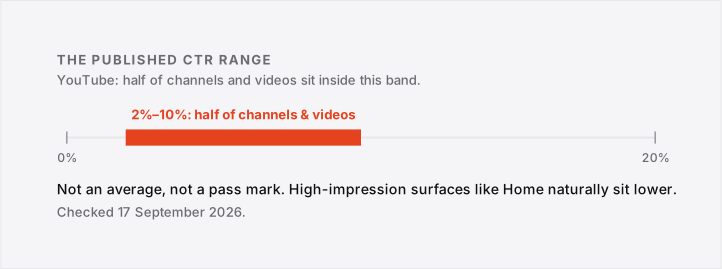
- YouTube does not publish a universal percentage you must hit to earn more recommendations. Compare your own videos in the same viewing context.
Check your own video: paste the link in the free outlier checker. It shows the maths and takes a second.
- The YouTube Algorithm Matches Videos to Viewers
- YouTube Algorithm Research Explains Shortlisting Before Ranking
- YouTube CTR Is a Clue, Not a Target
- Watch Time and Satisfaction Are Separate Signals
- The YouTube Algorithm for Small Channels Still Needs a Clear Audience
- Myths About the YouTube Algorithm That Ignore Evidence
- Conclusion (What I Would Do)
- FAQ: YouTube Recommendations
The YouTube Algorithm Matches Videos to Viewers
The YouTube algorithm is a set of systems that predict which videos a viewer will want to watch. YouTube's performance FAQ says it finds videos for your audience when they visit, not a guaranteed audience for each upload.
So recommendations differ from person to person. A signal is any piece of information the system uses, such as a previous watch or a dislike.
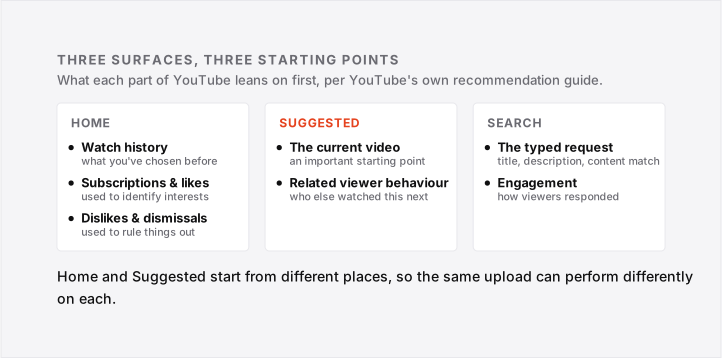
YouTube's recommendation guide names these signals:
- Watch and search history show what someone has chosen before.
- Subscriptions and likes help identify interests.
- Dislikes and dismissals help identify what someone does not want.
- Surveys ask whether watching felt worthwhile.
Your upload isn't marked against one platform-wide standard. YouTube is guessing how particular people will respond.
Home and Suggested Start From Different Places
Home mostly relies on watch history, according to that guide. Suggested, the videos beside or after one you're watching, starts from the current video.
Search is different. Someone typed a request, and YouTube looks at how the title, description and content match it, plus engagement, meaning viewers' responses.
On a cooking channel, someone searching for a rice-cooking fix is not the same viewer as someone browsing dinner ideas. One video might serve both, but the reason to click differs.
Before your next title, finish this: "Someone watching or searching for ___ would want this because ___." If you can't, changing tags won't fix the idea.
YouTube Algorithm Research Explains Shortlisting Before Ranking
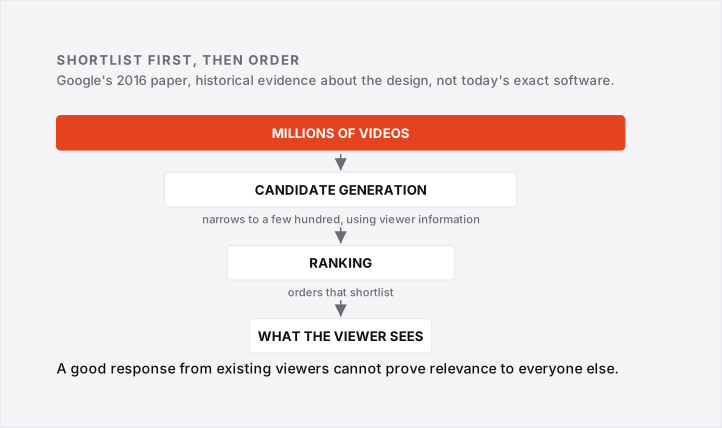
Google's 2016 recommendation paper describes candidate generation, then ranking. The first stage finds plausible videos; the second compares them. It's history, not YouTube's current software.
Candidate generation makes the shortlist. In the paper, it cuts millions of videos to hundreds using information about the viewer.
Ranking orders that shortlist. A separate system decides which videos show ahead of others.
This matters because a good response from your existing viewers can't prove the video is relevant to everyone else. One group choosing it doesn't show demand in another.
A Research Paper Is Not a Creator Checklist
The 2016 paper describes predicting expected watch time, meaning how much viewing a recommendation is likely to produce. It gives creators no guaranteed route into the shortlist.
I'd keep the explanation and skip the urge to reverse-engineer a pass mark from it.
- A published architecture shows a system's broad steps, not your next upload's fate.
- A video's public view count doesn't reveal who was offered it.
- A clear title doesn't guarantee a recommendation.
There's also an eligibility limit: YouTube says not every video can appear in Home or Watch Next. Strong viewer response isn't a promise of unlimited distribution.
You can't choose the shortlist. You can make the promise clear, so your intended viewer doesn't have to guess what the video is for.
YouTube CTR Is a Clue, Not a Target
Click-through rate, or CTR, is the share of impressions, counted thumbnail appearances, that become a view. YouTube calls it a diagnostic, not a target, and publishes a range rather than a pass mark.
- Home shows your thumbnail to more people who have never watched you, so CTR naturally drops.
- Very high CTR with low average view duration, the typical time viewers watch, is the pattern YouTube names for clickbait.
- The same video reads differently on different surfaces, so compare like with like.
So a falling CTR doesn't always mean the thumbnail failed. It can mean the thumbnail is reaching a colder audience, people less familiar with your channel.
Read CTR Beside Average View Duration
Average view duration and average percentage viewed, the share of the video people watch, tell you whether the click was an honest promise. Our CTR guide covers the range and YouTube's worked example.
In Analytics, open Reach, then the impressions funnel: thumbnail appearances, views, then watch time. Read the rate beside average view duration before changing packaging.
If viewers click and leave early, the thumbnail promised something the opening didn't deliver. If they click less but stay long, the promise is honest and the packaging is what to test.
Watch Time and Satisfaction Are Separate Signals
Watch time is the total time people spend watching your videos. YouTube has treated it as a discovery goal since its 2012 announcement, which described rewarding videos that keep people watching, including in later sessions.
Average view duration is how long one view lasts. Average percentage viewed is that time as a share of the video's length. They're different comparisons.
Relative watch time matters more for short videos and absolute watch time for longer ones, according to YouTube's guidance.
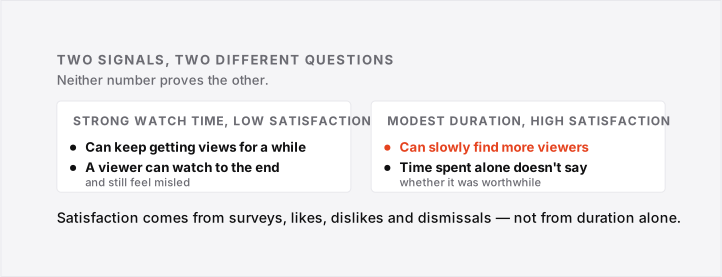
Satisfaction isn't duration. A viewer can watch to the end and feel misled. YouTube describes satisfaction through survey responses, likes, dislikes and dismissals, because time alone can't say whether it was worthwhile.
- A video with strong watch time and low satisfaction can keep getting views for a while.
- A video with modest duration and high satisfaction can slowly find more viewers.
- Neither number proves the other. They measure different questions.
So don't treat retention, how much of a video people watch before leaving, as the whole grade. A viewer can sit through a video and still dismiss it.
The YouTube Algorithm for Small Channels Still Needs a Clear Audience
Small channels should make the intended audience easy to recognise. YouTube's performance FAQ says recommendations lean on video and audience responses, not a channel-wide judgement after one quiet upload.
Don't assume YouTube owes each upload a fixed trial.
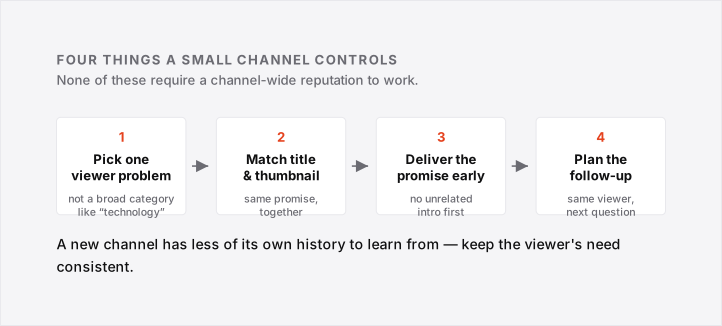
A new channel has little history to learn from. A handful of views can't reliably tell you which title or opening works.
I wouldn't switch topics after every quiet upload. Keep the viewer's need steady enough that your results become comparable.
- Choose a specific viewer problem, rather than a broad category such as technology.
- Make the title and thumbnail describe the same promise. Together, these are your packaging.
- Show evidence of that promise early, instead of opening with an unrelated introduction.
- Plan a follow-up for the same viewer, not just another video on a trendy keyword.
Public Outliers Suggest Questions, Not Ranking Answers
An outlier score is a video's views divided by its channel's normal. In our outlier score guide, 5x or more is an outlier.
A multiplier can't say why YouTube recommended the video, and public view counts hide impressions and satisfaction.
Our own study has a small clue. In our 27,985-video study, we compared each channel's titles only against its own. A tutorial title made a 5x video 1.38x as likely. A number or a list-style title made it 1.28x as likely.
Holding back the answer (1.01x) and promising something extreme (1.00x) showed nothing. Those are modest odds, not a recipe, and they measure titles only. The study lists both.
To find examples, use our free outlier method, or score a single video with the outlier checker. Then compare promises and openings.
On a cooking channel, I'd check whether the big upload solved a narrower problem than its neighbours. That gives you a test without claiming access to its recommendation history.
Myths About the YouTube Algorithm That Ignore Evidence
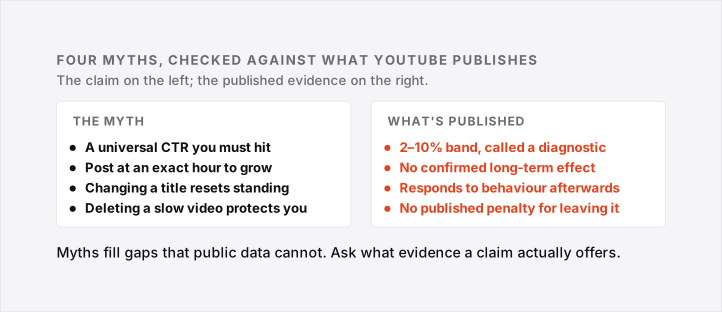
Myths persist because plausible stories fill gaps that public data can't. Ask what evidence a claim offers, and whether YouTube could measure it.
- A universal CTR percentage you must reach. YouTube calls CTR a diagnostic, not a target.
- Post at an exact hour and growth follows. Timing can matter for live or premiere events, but YouTube says it cannot confirm a long-term effect for ordinary uploads.
- Changing a title or thumbnail resets standing. YouTube describes performance responding to viewer behaviour afterwards, rather than a rule being triggered.
- Deleting a slow video protects the channel. There is no published penalty for leaving a quiet upload in place.
Superstitions comfort because they promise control. The honest version is duller: viewer responses are the evidence, and they take longer than a day to read.
Tags Are Not a Ranking Fix
Tags are optional descriptive words, and YouTube says they play a minimal role in discovery, mainly helping with common misspellings.
I wouldn't spend hours rewriting tags on old videos. Spend it on the promise a viewer sees before clicking.
External Links Do Not Boost Recommendations Either
Links from other sites can bring viewers, but no published mechanism says external links raise a video's recommendation standing.
Treat both claims the same way: work out what they'd need to prove, then look for that evidence. If none appears, spend the time on the video.
Conclusion (What I Would Do)
Start with the promise, then the first minute, then the follow-up. You can see all three, and YouTube's own guidance ties them to viewer responses.
- Rewrite one title so it names the specific viewer problem, then check the thumbnail shows the same promise.
- Cut whatever delays the promise in your opening. The audience retention graph, the line showing viewers left at each moment, is the check.
- Add an end screen pointing to the video that answers the obvious next question.
- Compare like with like in Analytics: same traffic source, similar upload age.
If a video stalled, I'd read impressions, CTR and average view duration together before changing anything. Then I'd fix whichever part broke the promise, and give the change a few uploads to show a pattern.
I'd leave tags and posting-hour theories alone until those three are done. The Monday plan isn't a secret setting. It's one promise, an honest opening and an easy next step.
Our outlier study separates unusual results from repeatable strategy. Make the same split when judging your own upload.
A new YouTube outlier breakdown lands in your inbox every Sunday.
FAQ: YouTube Recommendations
How does the YouTube algorithm work in 2026 compared with older explanations?
YouTube's help pages describe personalised recommendations using viewing history, performance and satisfaction. Older research explains parts of the engineering, not a current formula.
Satisfaction isn't a new replacement for watch time: YouTube described surveys in its 2021 explanation.
Does YouTube recommend old videos again?
Yes. YouTube's performance FAQ says older videos can gain attention when a topic becomes popular or new viewers find a channel.
A quiet opening period isn't a published expiry date. Check the subject and promise still serve viewers before abandoning it.
Does earning money from a video make it more likely to be recommended?
No. YouTube says its recommendation system does not know which videos earn advertising revenue.
The content can affect both ad suitability and recommendations, so the two can move together without one causing the other.
Can subscribers guarantee recommendations?
No. YouTube explains that subscriber count isn't the number of people who watch each upload.
People subscribe to channels they later stop watching. Plan around viewers who actually choose your videos, not the subscriber total.