An outlier is a video that beat its own channel's normal, and its outlier score is views divided by that normal. 5x or more counts.
This compares published methods, not accuracy. Where a formula is not published, it says so. No prices are quoted.
Quick answer
- Three tools describe a formula. Viewstats divides by the last 10 videos' average, More Often by a rolling median (neither re-checked on 29 September 2026), and Breakdown Theory's free checker by the median (the middle value once views are lined up in order) of up to 10 prior uploads, with the list shown.
- One publishes a partial one. vidIQ Outliers compares against the channel's usual views over a "similar timeframe".
- Five do not publish enough to reproduce a score: 1of10, OutlierKit, TubeLab, outlier.so and AmpiFire.
- Free starting points: BT's checker and channel analyzer, AmpiFire's free tool, vidIQ's limited free tier, and YouTube Studio's alpha Research tab for the few who have it.
- Breakdown Theory sells nothing on this list, so there is no affiliate reason to rank anyone.
Check your own video: paste the link in the free outlier checker. It shows the maths and takes a second.
- The Eleven Tools At A Glance
- Four Tools With A Published Formula
- Two Tools From YouTube And vidIQ
- Five Will Not Show Their Maths, And That Changes How You Use Them
- What "Free" Actually Means Here
- Your Viewers Matter More Than the Highest Outlier Score
- Conclusion (What I Would Do)
- FAQ: Choosing YouTube Outlier Tools
The Eleven Tools At A Glance
The second column matters most. A score you cannot rebuild is a sorting aid.
| Tool | What it divides by | Published? | Free to try |
|---|---|---|---|
| BT checker | Median of up to 10 prior same-format uploads | Yes, list shown | Yes, no account |
| BT channel analyzer | Same formula, every upload on a channel | Yes | Yes |
| Viewstats | Average views of the last 10 videos | Yes | No |
| More Often | A rolling median of a moving window | Not re-checked | Extension; price not stated |
| vidIQ Outliers | Channel average, "similar timeframe" | Partly | Limited free tier |
| YouTube Studio Research | Compared with your other videos | Not detailed | Alpha, few users |
| 1of10 | The channel's "typical views" | Window not specified | No |
| OutlierKit | Not published | No | Credit-based |
| TubeLab | Not published | No | No |
| outlier.so | Not published | No | No |
| AmpiFire | Not checked | Not checked | Page titled "Free Tool" |
Four Tools With A Published Formula
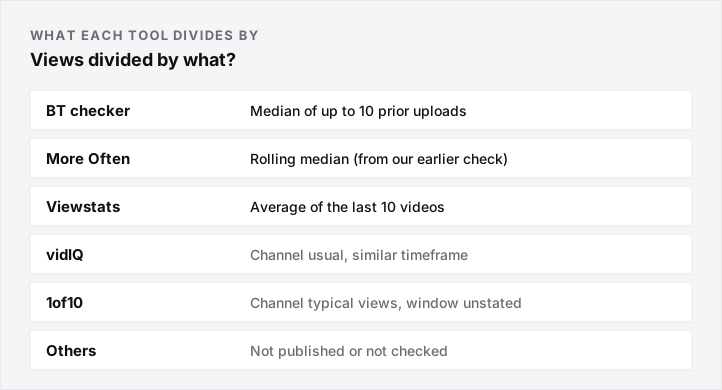
Each block gives a verdict, one fact and one limitation. In our study, 8.3% of 16,331 long videos cleared 5x, about 1 in 12, so badges are common.
1. BT checker: shows its list
Pick it when you already have 1 video. It divides views by the median of up to 10 prior same-format uploads, and prints them.
Limitation: it does not search YouTube, and its daily data allowance can run out.
2. BT channel analyzer: the whole channel
Pick it for context. The analyzer scores every upload on one channel with the checker's formula.
Limitation: 1 channel at a time. For discovery, see the free method guide.
3. Viewstats: a named window
Its help page gives a 204x example, meaning 204 times the last ten videos' average.
Limitation: one huge hit drags an average up. Not re-verified on 29 September 2026.
4. More Often: outliers while you browse
Pick it to collect candidates during normal viewing. Its site offers a Chrome extension to "identify and collect outliers wherever you are on YouTube".
Limitation: its site no longer spells out the rolling-median method or whether the extension is free, as checked on 29 September 2026.
Two Tools From YouTube And vidIQ
5. vidIQ Outliers: a description, not a formula
Pick it if you already use vidIQ. Its help page compares a video with the channel's usual views over a similar timeframe. There is a limited free tier.
Limitation: it does not say which uploads form the baseline (the usual level a video is compared with).
6. YouTube Studio Research tab: first-party, few have it
Tubefilter reported on 5 August 2026 an outlier multiplier and a "Watched by my viewers" filter, tested with a small number of users.
Limitation: it is alpha, with no wider rollout announced. Not everyone has it.
Five Will Not Show Their Maths, And That Changes How You Use Them
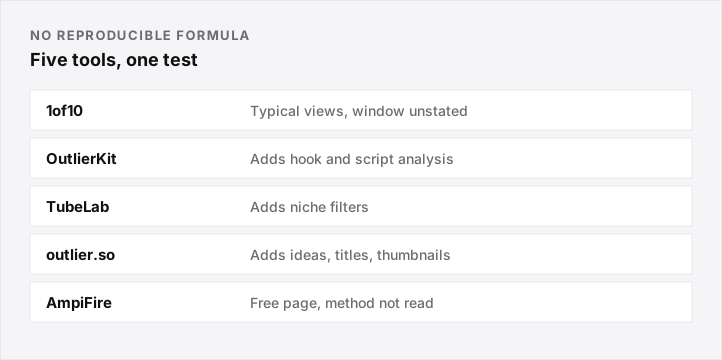
The five tools below present outlier discovery without a published, reproducible calculation that I could verify. That makes them discovery tools, not measurement tools.
7. 1of10: typical views, window unstated
It says on its features page it divides by the channel's "typical views".
Limitation: no window or exclusions specified. Not re-verified on 29 September 2026.
8. OutlierKit: discovery plus script work
OutlierKit adds hook analysis (the opening promise that earns the next minute of watching).
Limitation: no reproducible calculation, and it runs on credits.
9. TubeLab: niche filters
On TubeLab, filters can matter more than a bigger multiplier, because comparable videos beat keyword matches.
Limitation: no reproducible calculation published.
10. outlier.so: ideas and packaging
outlier.so adds idea, title and thumbnail generation next to discovery.
Limitation: the score cannot be rebuilt from anything it publishes.
11. AmpiFire: free, mostly unverified
Its page at tools.ampifire.com/youtube-outliers is titled "YouTube Outlier Finder Free Tool".
Limitation: I could not read what it divides by, so I cannot rate its method.
The test for all 5: ask for one scored video and the uploads beneath it. If you cannot rebuild the division, treat the number as a sorting aid.
What "Free" Actually Means Here
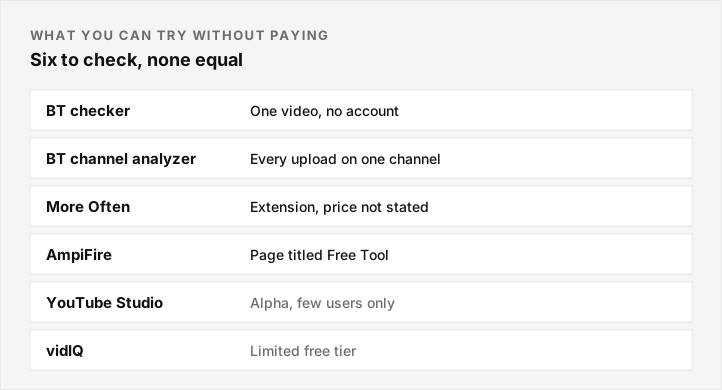
Five ways in without paying, and they are not equal:
- BT checker and channel analyzer: free, no account needed.
- AmpiFire: a page titled "Free Tool" (see block 11).
- vidIQ: a limited free tier, advanced outlier filters behind a paid plan.
- YouTube Studio Research: free, but alpha for a few users.
Free limits change, so read the current terms before you build a routine around one.
Your Viewers Matter More Than the Highest Outlier Score
Your viewers need a reason to choose your next video. A tool can flag 1 unusual result. It cannot show that another channel's audience wants what yours wants.
Start with comparable videos, not a minimum multiplier; the score guide shows the 5x bar. Match the audience's problem and the kind of video you can produce.
- Separate Shorts from longer videos before comparing anything.
- Record the measurement date, because views and baselines both move.
- Compare videos at similar ages where the data allows it.
- Look at the ordinary uploads beside the hit, not only the hit.
That last one matters. Looking only at winners hides how often the same idea failed.
There is also a hard limit no public tool crosses. Impressions, meaning the number of times YouTube showed a video, and click-through rate are owner-only data in YouTube Studio, and they usually hold the answer.
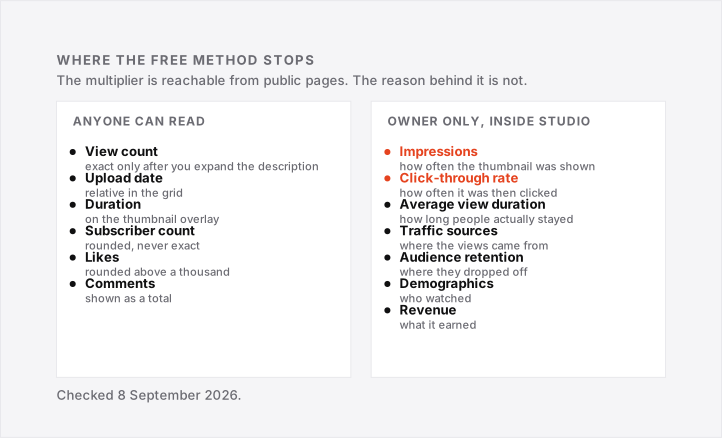
Write down one testable explanation instead. Those are possibilities to test on your own channel, not findings. The score guide explains the formula, and the weekly outlier breakdown works through one real video at a time.
Conclusion (What I Would Do)
I would start with 1 video I already found and check its baseline before paying for discovery. That separates needing better measurement from needing more candidates.
If you do compare services, give them the same channel and the same search topic. Otherwise one looks better because it got the easier question.
- Save the videos each service returns.
- Count how many genuinely fit your audience and format.
- Check whether you can reconstruct a score.
- Note how long it took to reach a usable idea.
Choose the 1 that helps you make a better next upload, not the one with the largest badge; the free method costs nothing to try first. No tool here promises growth.
FAQ: Choosing YouTube Outlier Tools
Can an outlier score prove a video grew organically?
No. A score compares views against a baseline. It cannot distinguish a recommendation surge from an external link, a news cycle or paid promotion.
Should I install several outlier extensions together?
Not at first. Two extensions scoring the same video with different baselines will disagree, and you will not know which is closer.
Should I buy an annual plan before testing searches?
No. Run your real research question on a free tier or monthly plan first. The question is whether it returns videos your audience would watch.
Is a 5x badge rare?
No. About 1 in 12 long videos in our study cleared 5x, so a badge alone is weak evidence. See the study.