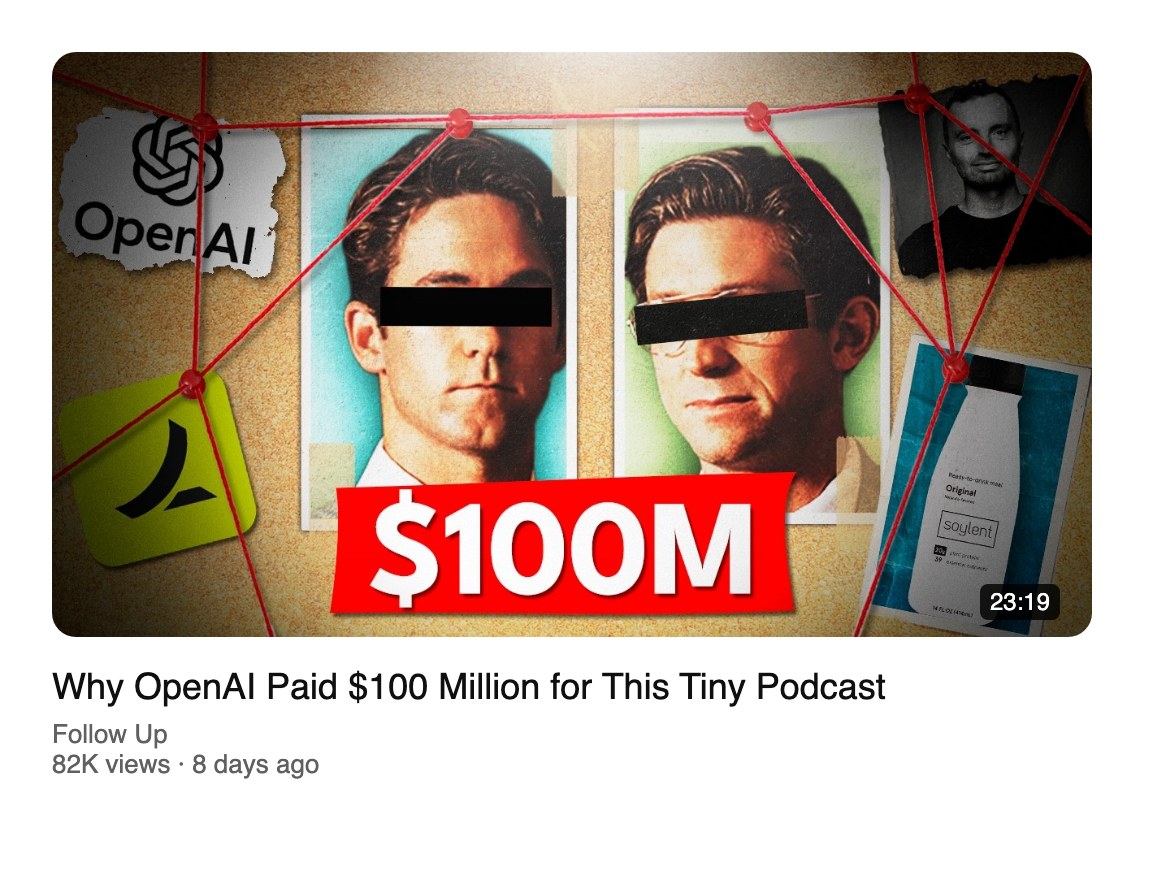
The channel Follow Up had one video and 2,256 views to its name. Then “Why OpenAI Paid $100 Million for This Tiny Podcast” got 81,971 views in 7.3 days, roughly 36 times more.
The channel had about 20 subscribers on 30 September, according to vidIQ, a YouTube analytics tool. The video went up on 3 October.
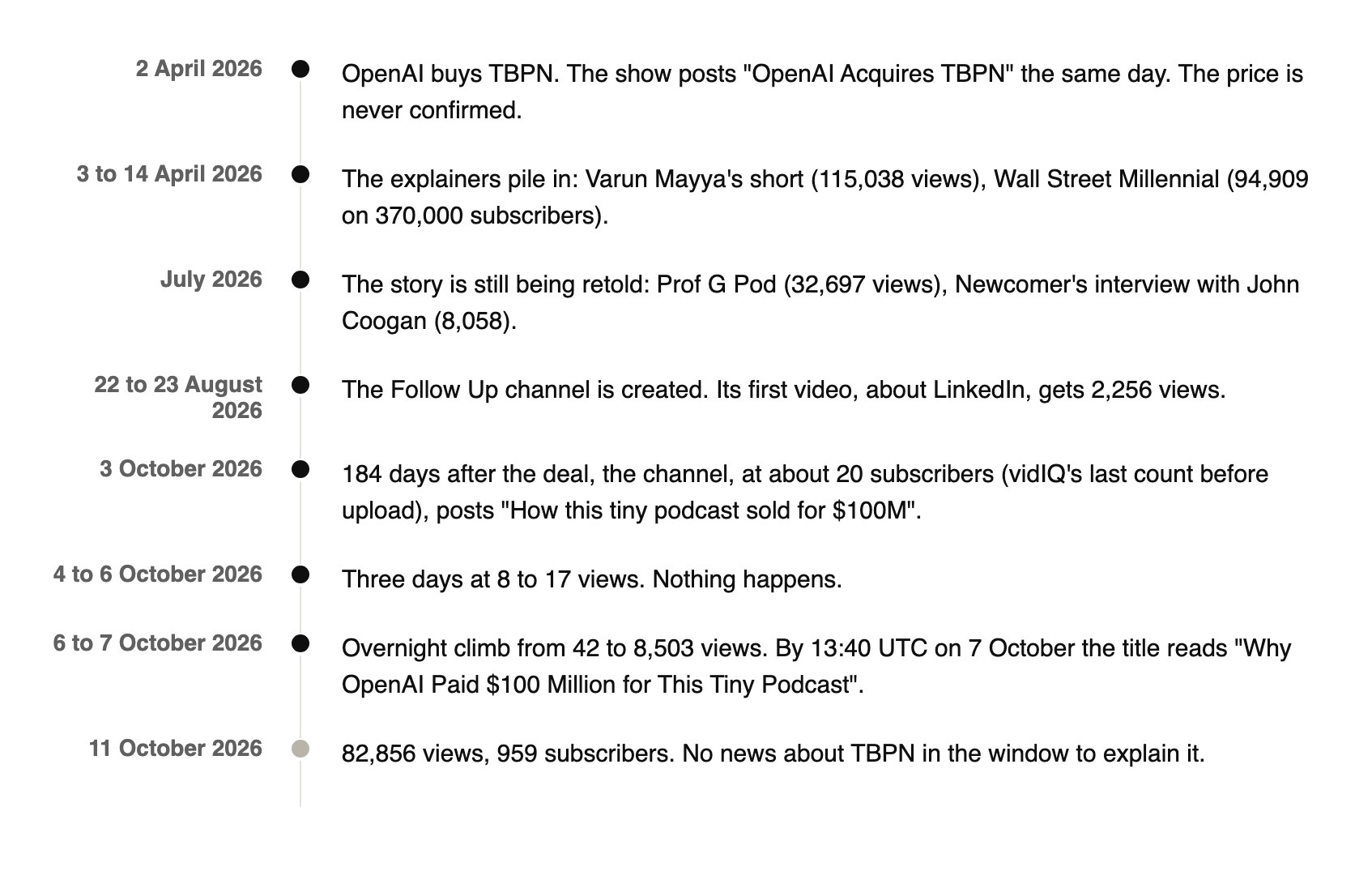
Also, the story was not new. OpenAI bought the podcast TBPN on 2 April 2026, and six other channels had explained the deal before this one arrived 184 days later.
So the question for me is how a late version from a tiny channel passed five of those six on raw views, and all six on views per subscriber.
So let’s look at the packaging, the opening and the rest of the edit, and see if there are things other creators can replicate for better views.
Quick answer
- The video got 81,971 views in 7.3 days, about 36 times the channel’s only earlier video, on a channel that had about 20 subscribers before it.
- Six channels explained the same deal first. This one passed five of them on raw views and all six on views per subscriber.
- This is a 2-video channel, so it is not a certified outlier. Only the next uploads can show whether it repeats.
We are not associated with Nic Conley, Follow Up or The Follow Up, and we are not promoting them. This is an outlier we found, and it looked interesting enough to break down.
- Who Made This, and How Small Was the Channel?
- The Late Retelling, Defined in Plain Words
- Who Else Told the Same Story First?
- How Did a Tiny Channel Outscore the Giants?
- What Do the Biggest Versions Have in Common?
- Where the Late Version Pulled Ahead (Build, Payoffs and Proof)
- Is a Finished News Story Still Worth Making?
- So Was It Skill or a Lucky Week?
- What We Cannot See From the Outside
Who Made This, and How Small Was the Channel?
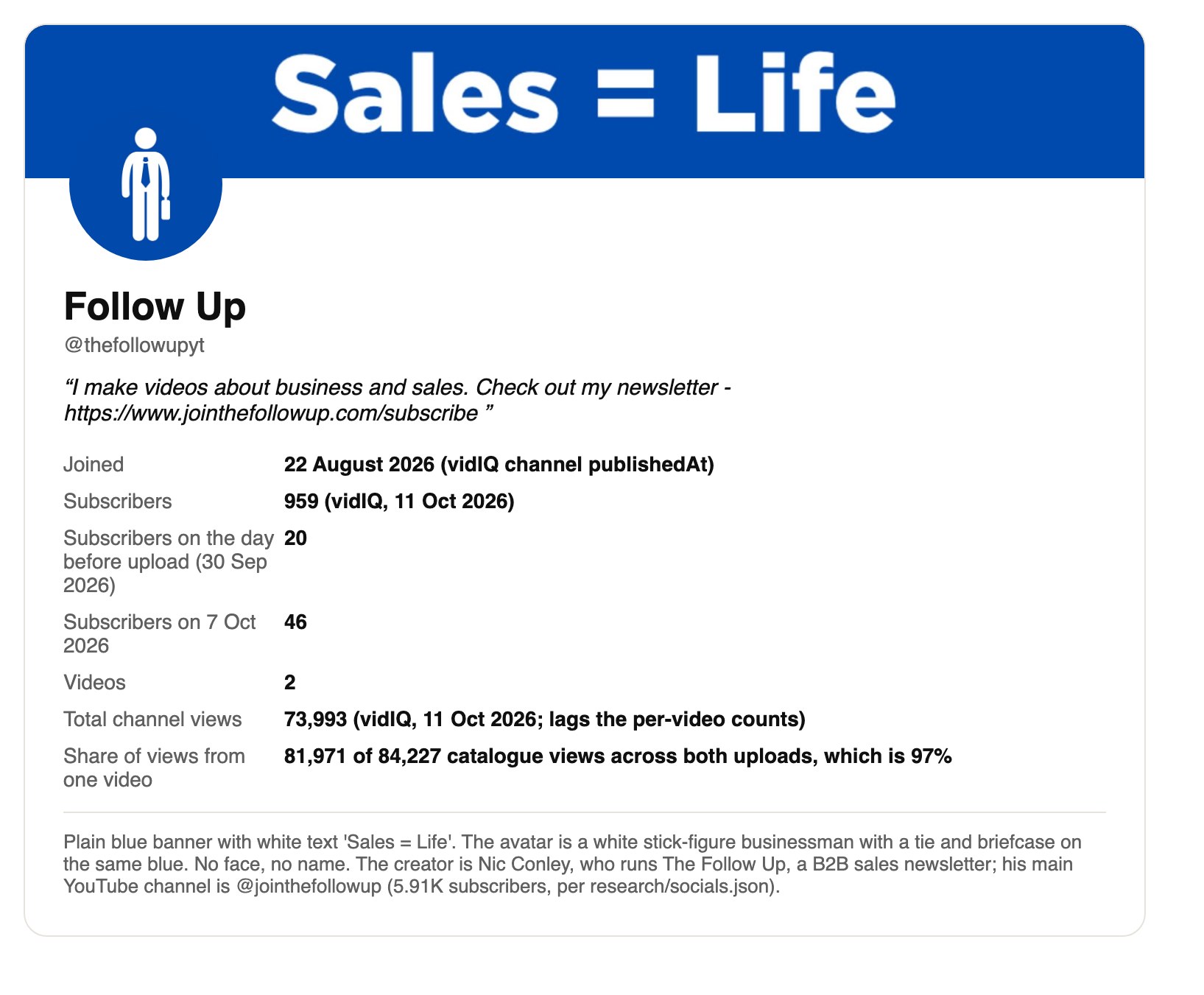
Follow Up (@thefollowupyt) is run by Nic Conley, who also runs The Follow Up, a B2B sales newsletter. B2B means business to business, so selling to companies.
The channel was created on 22 August 2026 and has two videos. His main channel is @jointhefollowup, with 5.91K subscribers.
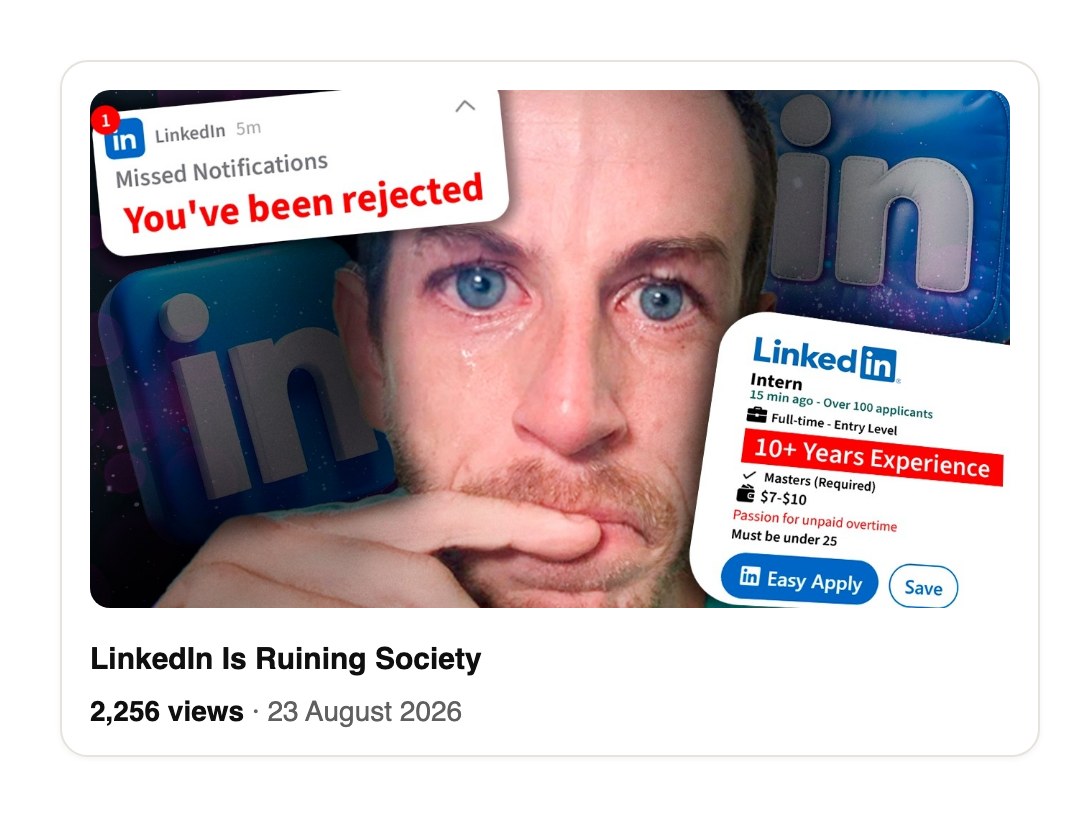
The first video, “LinkedIn Is Ruining Society”, went up on 23 August. It is 15 minutes 20 seconds long and had 2,256 views, 52 likes and 15 comments.
Here is how the subscriber count moved, per vidIQ:
- 20 subscribers on 30 September, its last count before the upload
- 46 on 7 October, after the takeoff had already begun
- 959 on 11 October
So the channel gained about 940 subscribers, and I think most of them came from this one video.
The video had 81,971 views, 1,146 likes and 141 comments when I collected it. That is 97% of the 84,227 views across both uploads.
I need to be clear about the limit here. This is a 2-video channel, so the 36 times compares one video with one video, and the tool that tests for outliers needs at least three videos.
My verdict is that this is a real jump but a thin sample, so I treat it as a case to learn from and not a proven pattern.
The Late Retelling, Defined in Plain Words
A late retelling is a long, chaptered video about a deal everyone has already covered, posted months after the news.
OpenAI announced the deal on 2 April 2026, and Axios reported no terms. This video went up on 3 October, 184 days later.
I found no news wave around the upload. A news wave is a burst of coverage that lifts every video on a topic, and the only nearby TBPN event was a live broadcast on 4 October, a day after the upload.
Here is what the format looked like:
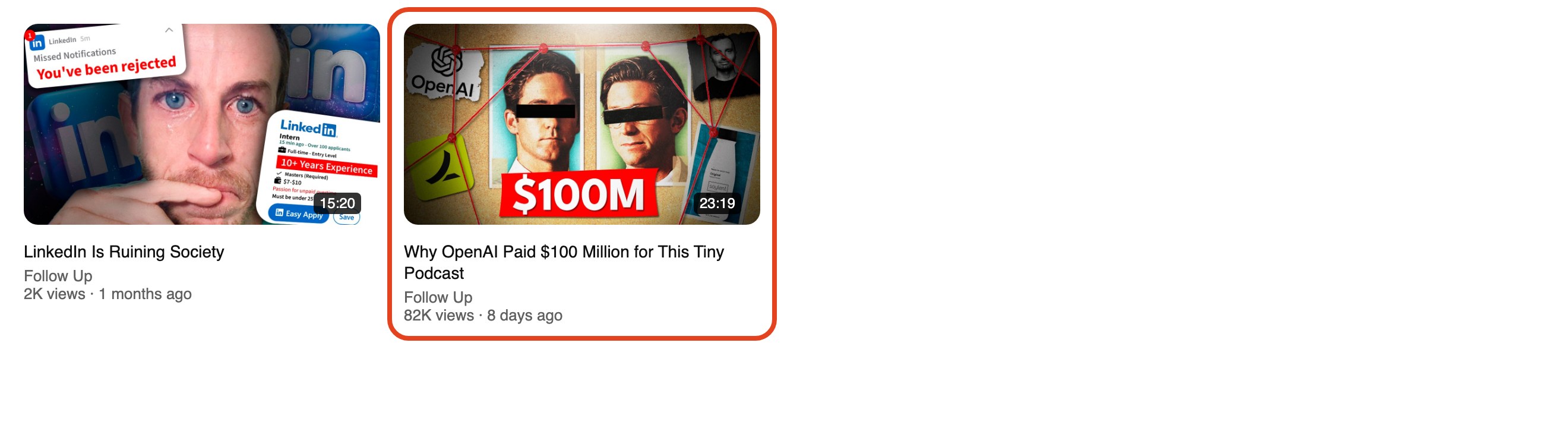
- 23 minutes 19 seconds long, with three chapter cards, the last one called “The $100 Million Payoff”
- A thumbnail built like a detective evidence board
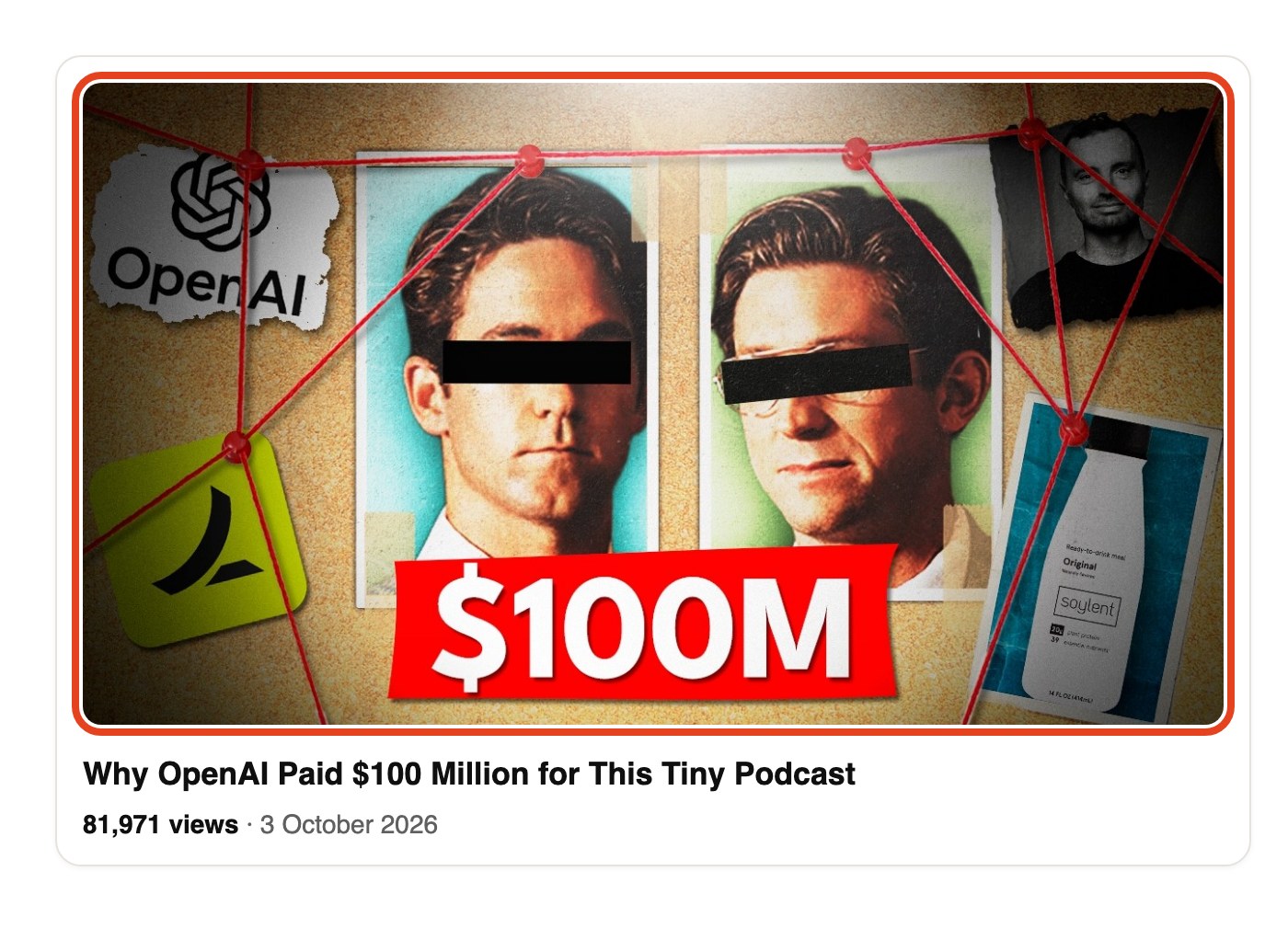
The thumbnail is a cork board with red string, two men with black bars over their eyes, the OpenAI logo and a Soylent bottle. It has one word, “$100M”, on a red banner.
I think the evidence-board look tells a scrolling viewer that a story is being uncovered. Nobody I could find has tested censored faces or corkboards, so that is my reading, not a rule.
Also, the $100 million is the video’s figure. I could not find a source that confirms it, and the Financial Times reported “low hundreds of millions”, according to a Techmeme summary.
My verdict is that a long retelling with no news help is harder to explain away as a trend, and I think that makes the result more interesting.
Who Else Told the Same Story First?
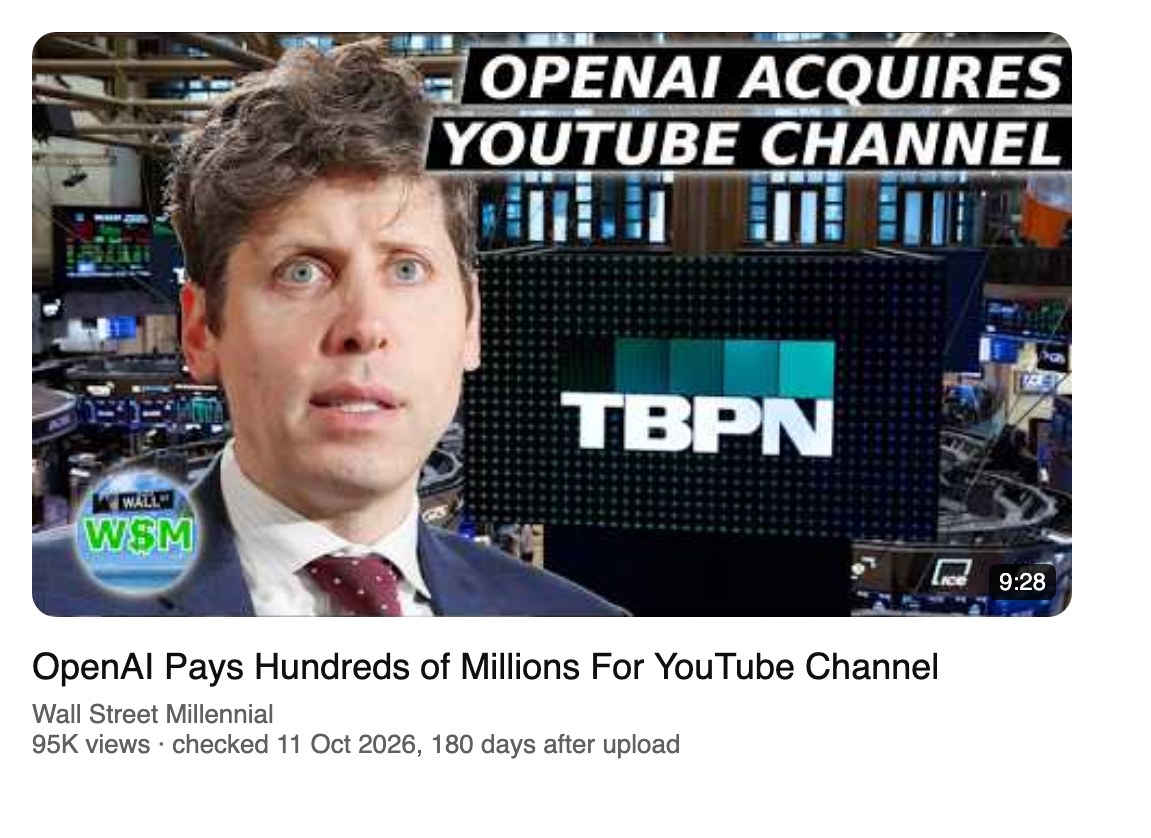
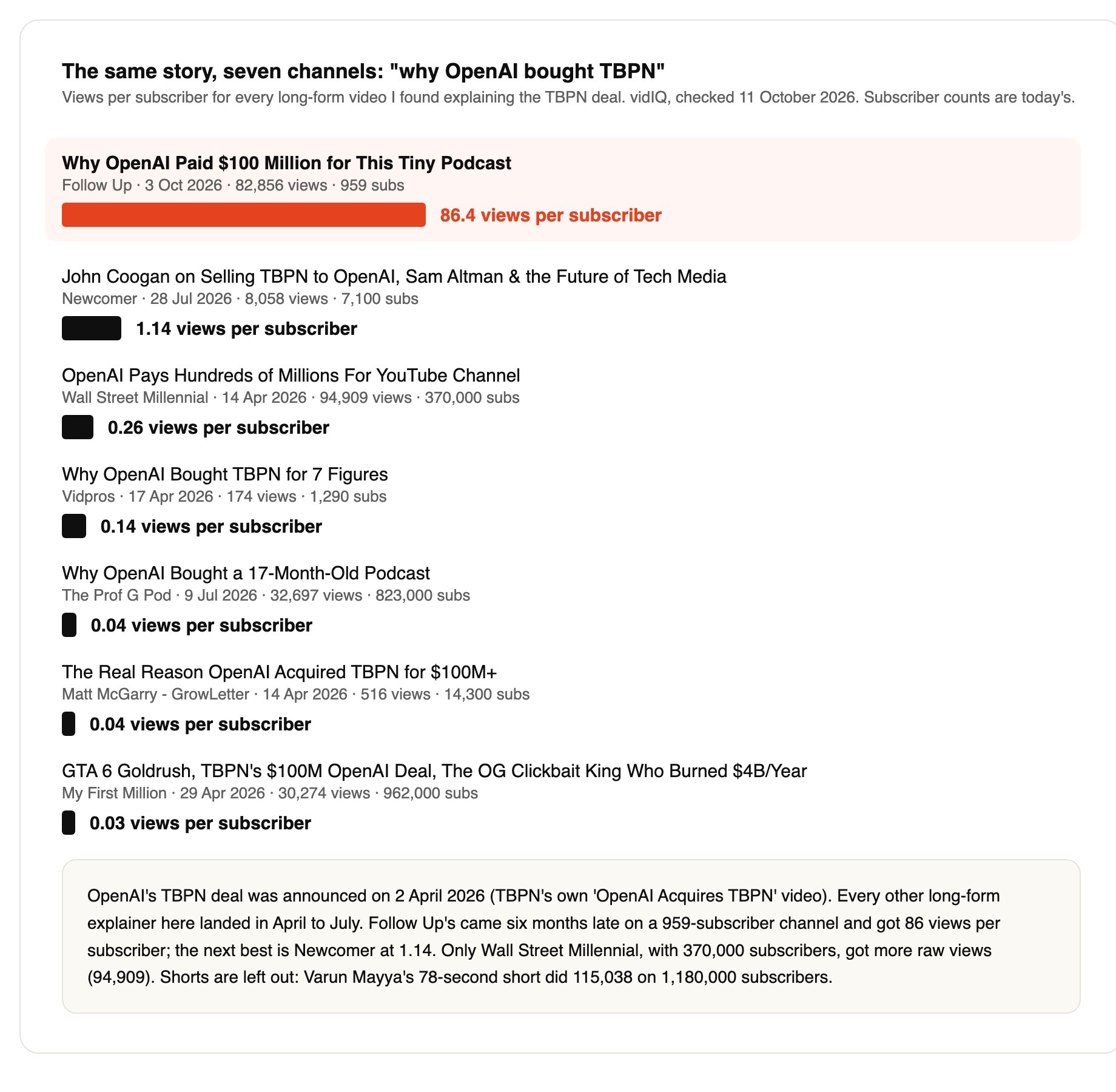
I found six long-form videos on the same deal, from April to July 2026. Three come from big channels. Wall Street Millennial posted on 14 April, with 370,000 subscribers and 94,909 views.
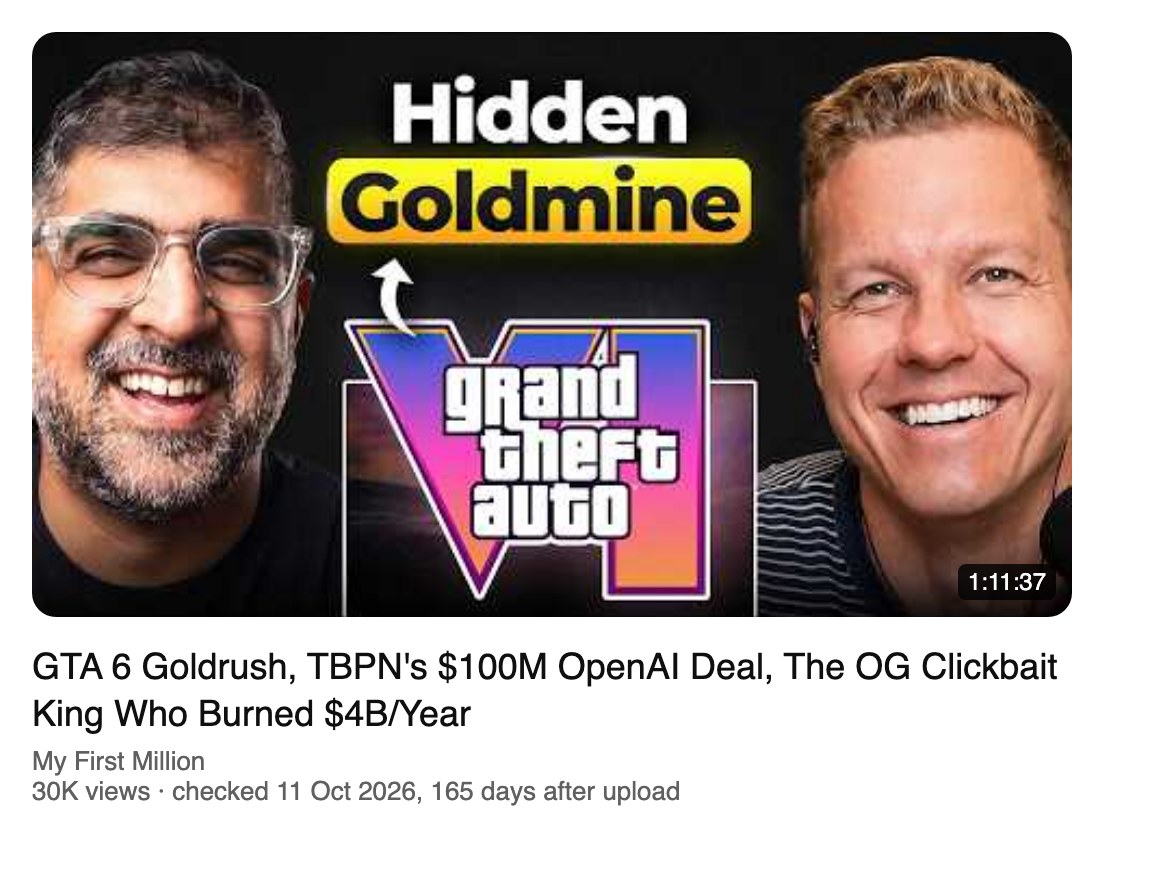
My First Million posted on 29 April, with 962,000 subscribers and 30,274 views. From the title, the deal is one of three topics in that episode.
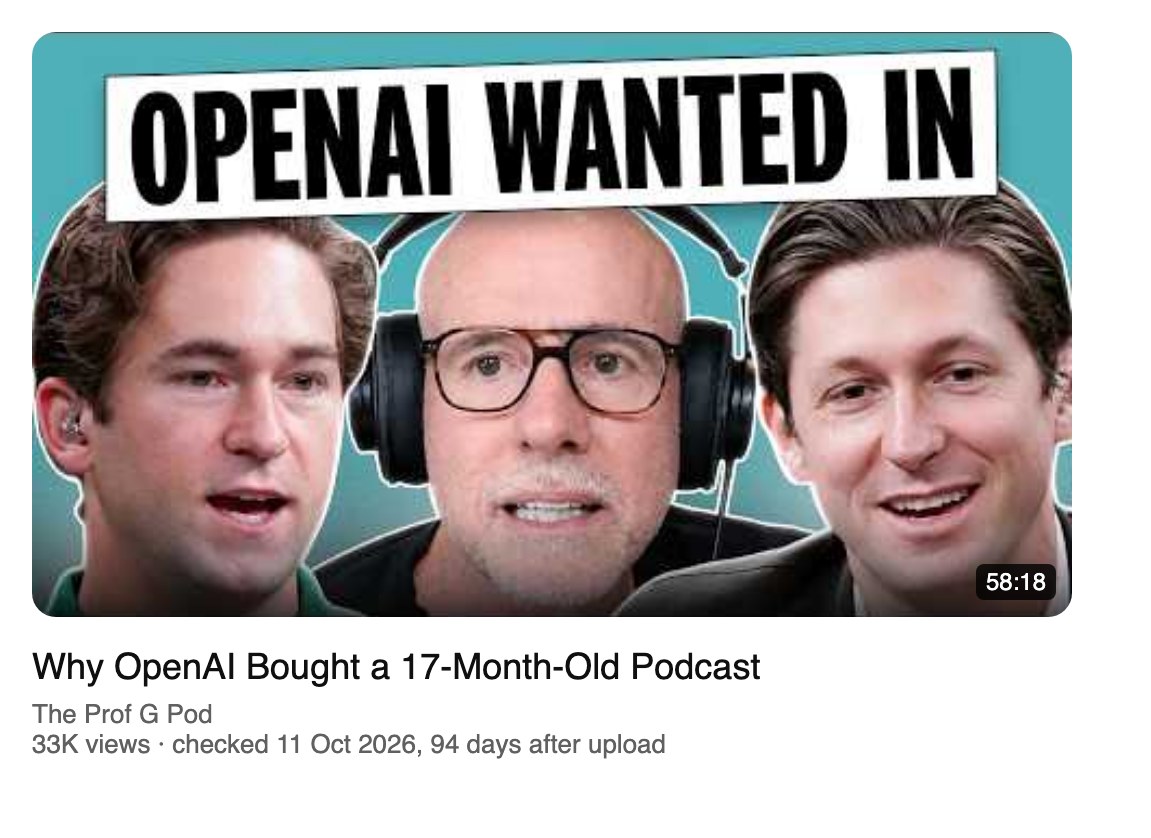
The Prof G Pod posted on 9 July, with 823,000 subscribers and 32,697 views.
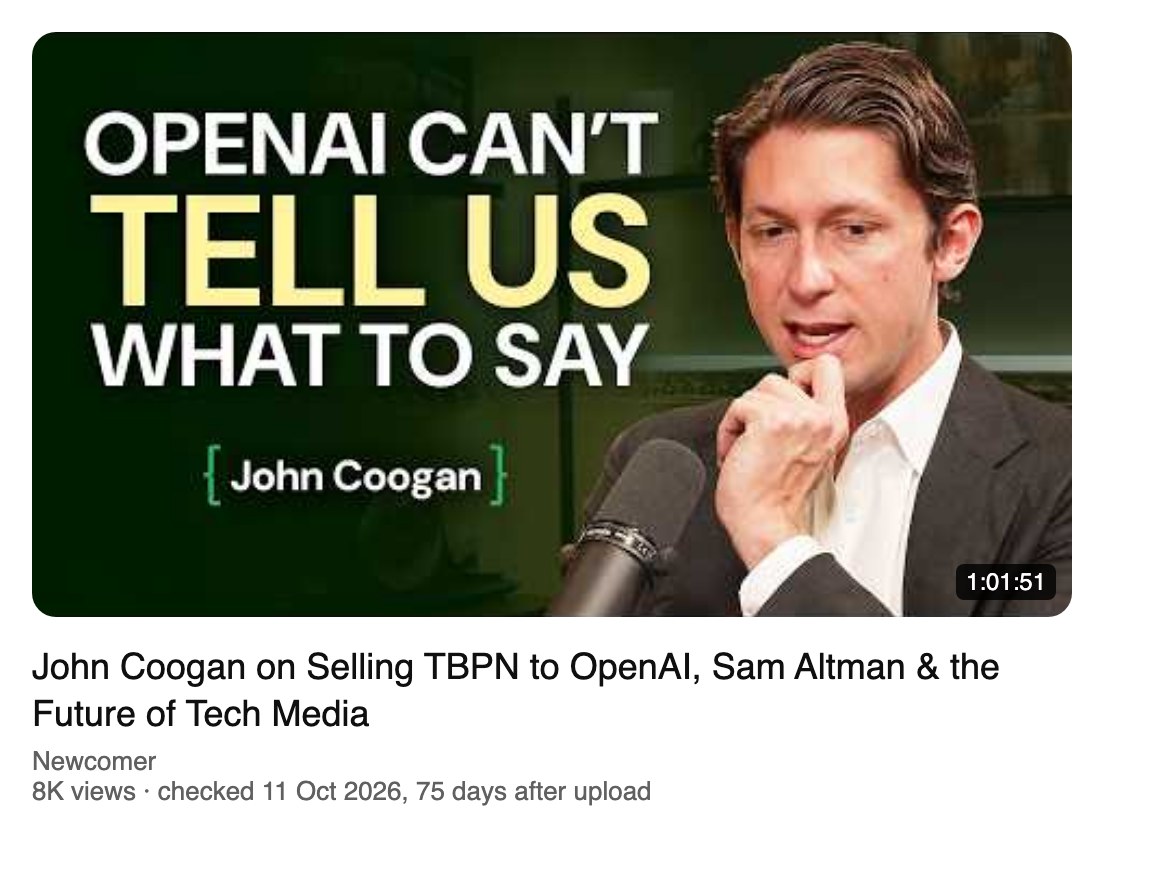
The other three are small. Newcomer posted an interview with John Coogan, one of TBPN’s two hosts, on 28 July, with 7,100 subscribers and 8,058 views.
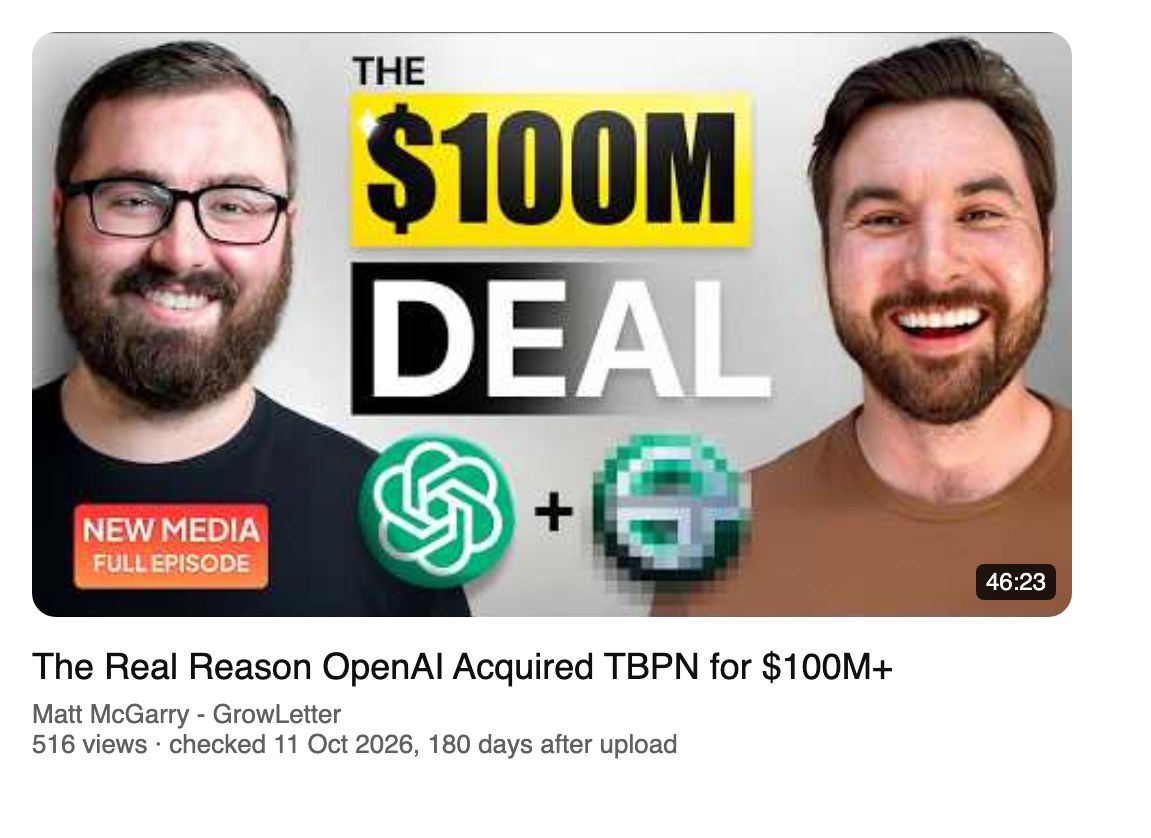
Matt McGarry’s GrowLetter posted on 14 April, with 14,300 subscribers and 516 views.
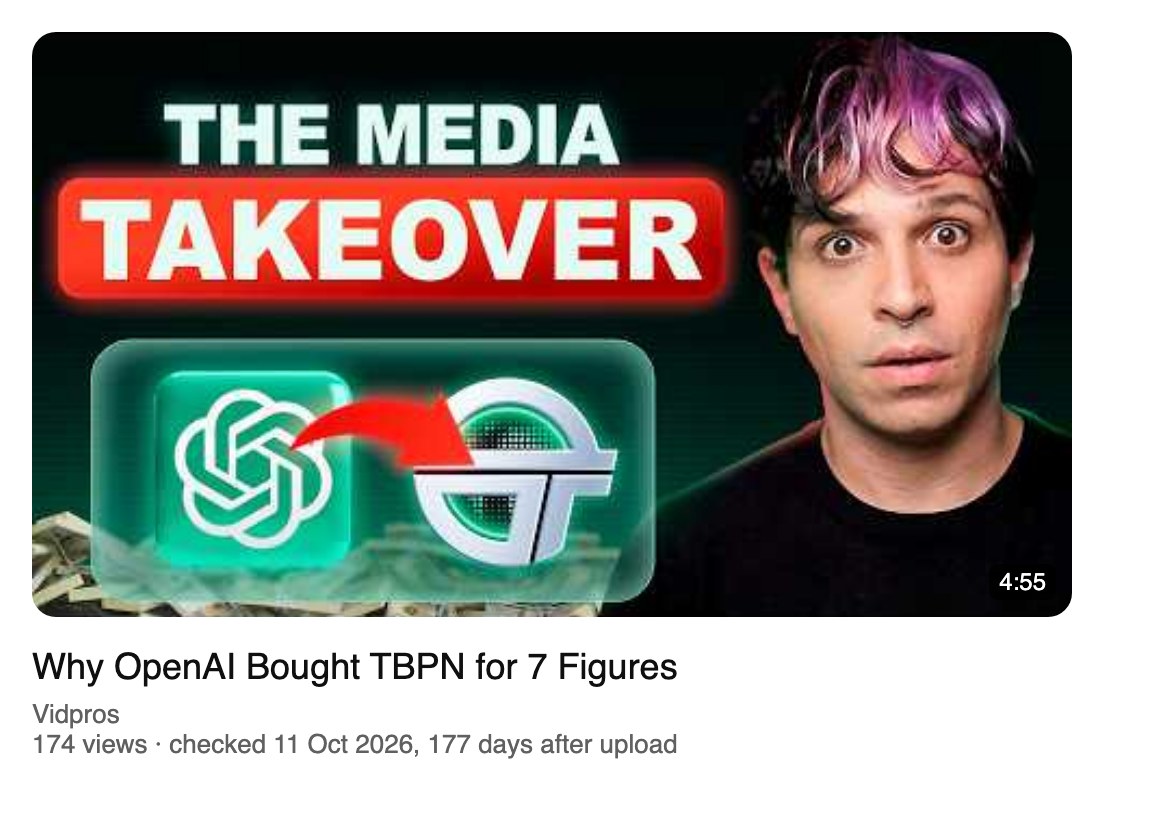
Vidpros posted on 17 April, with 1,290 subscribers and 174 views.
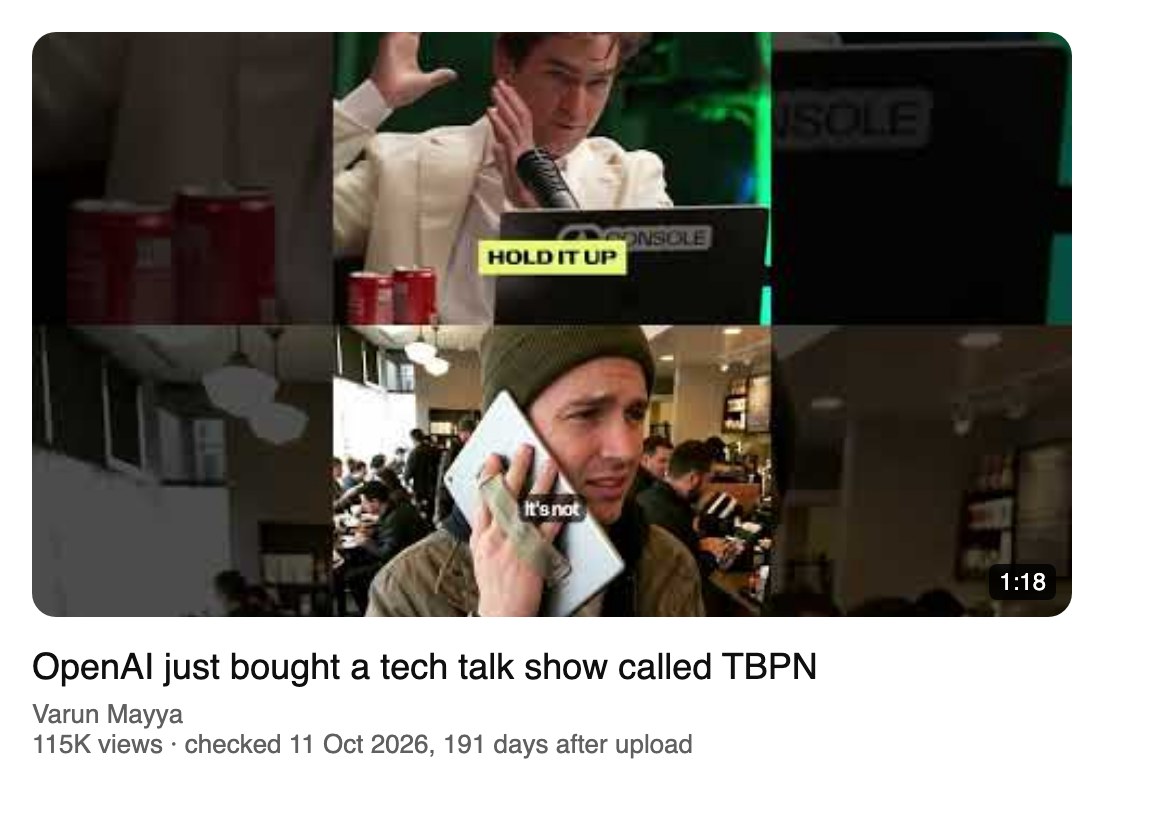
I left out Shorts, which are very short vertical videos. Varun Mayya’s 78-second Short from 3 April did 115,038 views on 1,180,000 subscribers.
This list is incomplete. It is what vidIQ surfaced, and the search results also show Full Disclosure with 17,437 views and The Verge with 16,097, neither in my table.
Also, I did not watch the six. I know them only by title, channel, date and views.
My verdict is that this was a crowded story, so a late version had every reason to be ignored, which I think makes the result worth explaining.
How Did a Tiny Channel Outscore the Giants?
On raw views it passed five of the six, and on views per subscriber it passed all six. I think browse and suggested, not search, carried it.
Browse and suggested means YouTube putting a video on someone’s home page or in the “up next” list, not a viewer typing a search.
First, the views. vidIQ counted 82,856 on 11 October, against the 81,971 I used above, which is just two pulls at different times.
Only Wall Street Millennial is ahead on raw views. This one passed The Prof G Pod and My First Million.
Next, views per subscriber, which is views divided by subscribers. For Follow Up, 82,856 divided by 959 is about 86.4.
For Newcomer, the next best, 8,058 divided by 7,100 is about 1.14. The other five sit between 0.03 and 0.26.
It also did this fast. For three days it sat at 8 to 17 views, then overnight on 6 to 7 October it went from 42 to 8,503. The rivals had been live since April to July.
Now the evidence against my own number. Views per subscriber flatters a tiny channel, because subscriber counts are today’s and this one went from about 20 to 959 after the upload.
Also, the rivals are not a clean control. Most were made for the April news and had months to collect views.
Next, search. I used vidIQ’s YouTube keyword data, which counts YouTube searches, not Google searches.
- “tbpn”: 241,834 a month, mostly people looking for the show itself
- “why openai bought tbpn”: 4,972
- his own title: 3,935, with no baseline, so the video may be creating these searches
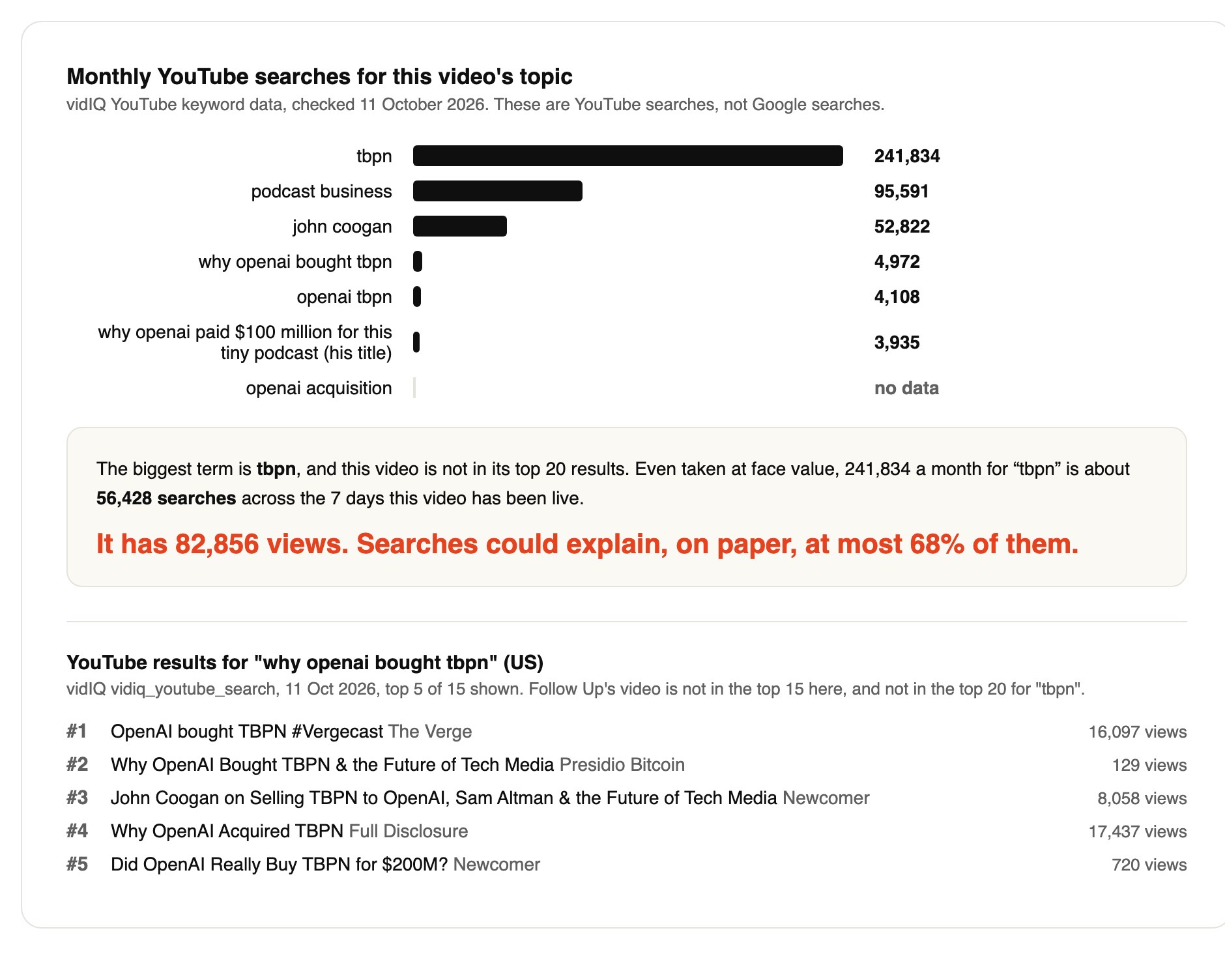
Here is the ceiling. 241,834 searches a month times 7 days live, divided by 30, is about 56,428 searches.
If every one of them clicked this video, that is 68% of 82,856 views. So on paper, search cannot be ruled out by volume alone.
But the video is not in the top 20 results for “tbpn”, or the top 15 for “why openai bought tbpn”. Also, three flat days followed by an overnight climb looks like browse and suggested, not search.
This read is expected, not measured, because we do not have his YouTube Studio.
My verdict is that the late version clearly beat the giants on views per subscriber, and I think browse and suggested carried it, though I cannot prove that from outside.
What Do the Biggest Versions Have in Common?
The three videos with the most raw views all leave TBPN out of the title. All four videos that name it did worse.
- Wall Street Millennial, 94,909 views: “OpenAI Pays Hundreds of Millions For YouTube Channel”
- Follow Up, 82,856 views: “Why OpenAI Paid $100 Million for This Tiny Podcast”
- The Prof G Pod, 32,697 views: “Why OpenAI Bought a 17-Month-Old Podcast”
The ones that name TBPN are My First Million (30,274), Newcomer (8,058), Matt McGarry (516) and Vidpros (174).
That is seven titles, so it is a small sample. Also, channel size muddies it, and My First Million’s title lists three topics.
I think leaving TBPN out helps a viewer who has never heard of it. According to the comments, one viewer wrote:
I had no clue why TBPN hit my feed or what it was and this was the perfect video to get up to speed. Excellent story that highlights the importance of relationships in sales, and how they accelerate and compound the success within a career
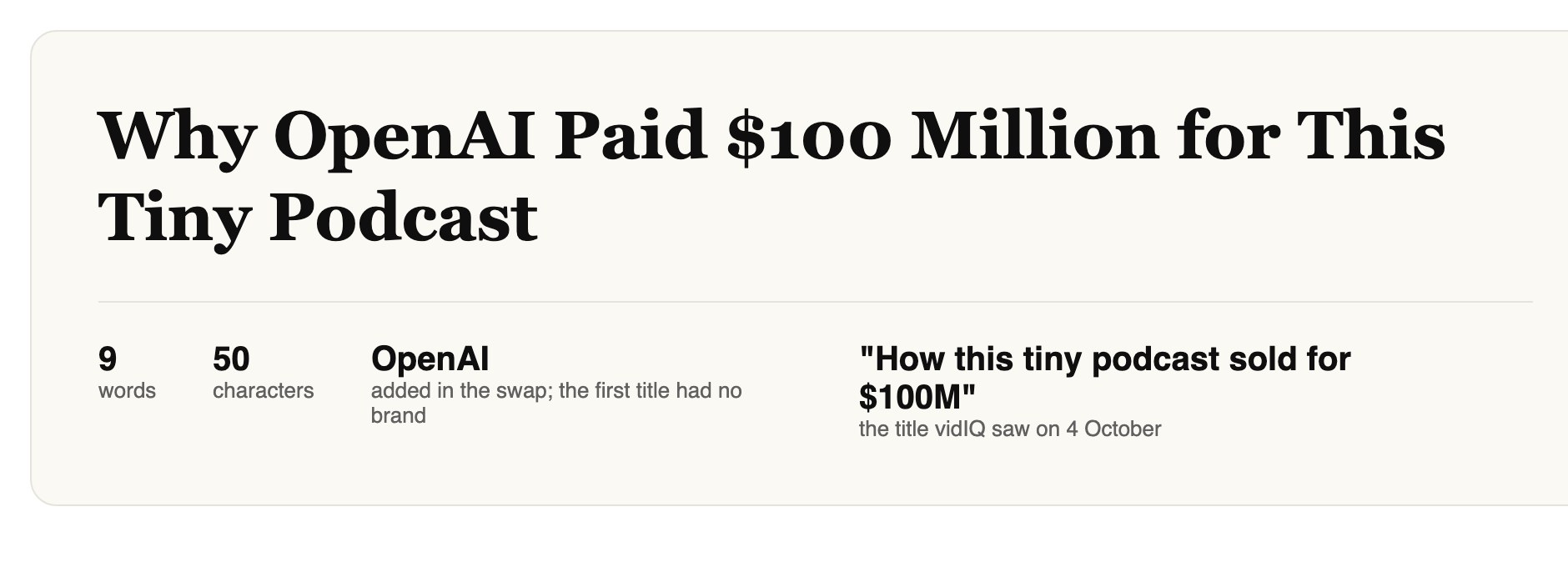
The title has 9 words and 50 characters. It names the famous buyer, writes the money out in full, and calls the subject “this tiny podcast”.
I think a $100 million price next to “tiny” is the kind of contrast Ali Abdaal calls being fairly extreme.
But nobody I found has tested the brand name or the word “tiny”.
Now the swap. vidIQ saw the first title, “How this tiny podcast sold for $100M”, on 4 October at 10:42 UTC. It saw the new one on 7 October at 13:40 UTC, when the video had 8,503 views.
The takeoff began on the afternoon of 6 October UTC, inside that window, so the new title may have been the spark. It adds “OpenAI” and turns a statement into a “Why” question.
But vidIQ records when it saw a title, not when it changed, so the order cannot be proven. The thumbnail did not change, and no A/B test, which shows two versions to different viewers, was recorded.
Also, YouTube has said a title change does not trigger more impressions on its own. Impressions are the times a thumbnail is shown, so any lift has to come from viewers clicking more.
My verdict is that the top three all name OpenAI and leave TBPN out, and the top two also put a big money figure in the title. I think that is a lead to test, and the swap is a possible spark I cannot prove.
Where the Late Version Pulled Ahead (Build, Payoffs and Proof)
I did not watch the rivals, so I cannot say their builds were weaker. I can only say what this one did, and why I think it held viewers.
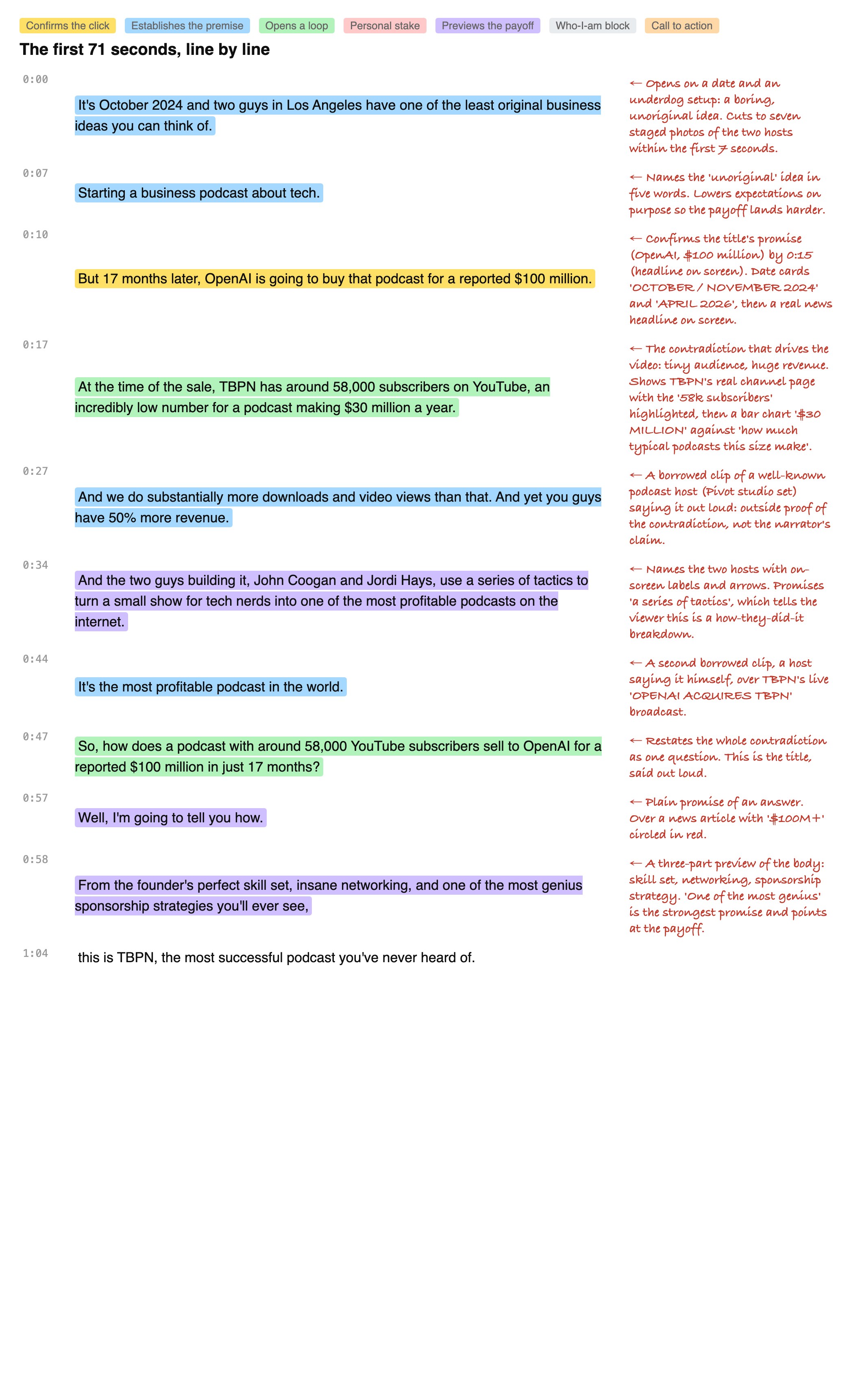
The opening confirms the title at 0:10, with a real headline on screen. By 0:22 it shows the contradiction: about 58,000 subscribers against $30 million a year.
The build after the opening is what stands out:
- 8 open loops, which are questions the viewer still wants answered, and all 8 are paid on screen
- Sam Altman is planted at 3:16 with “remember that”. At 17:39 he reminds viewers that Altman invested in Soylent, John’s first company
- On-screen maths: 31 sponsor logos at 13:11, then 250 episodes times 20 ads is 5,000 ad reads at 13:26
- At 14:00, $30 million divided by 31 sponsors is about $968k each on average, which pays the opening contradiction
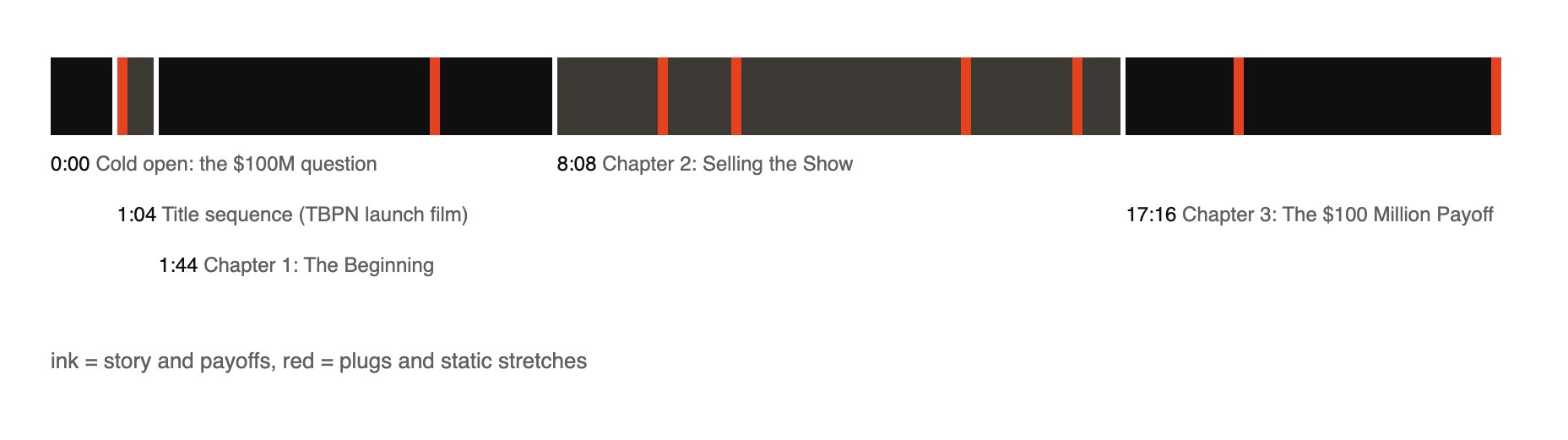
The edit has 668 cuts, which is 28.6 a minute, and 70 a minute in the first two minutes. A cut is one shot change.
He held his own intro back until 10:56, right after the biggest payoff. His other plug, a free cheat sheet at 14:37, sits right after the $968k maths, and there is no outside sponsor.
But it is no rulebook video. The intro follows 12 rules I checked and breaks 7, and the body follows 2, breaks 3 and partly follows 9.
It also has about 40 seconds of music-only trailer near the start, and a 52-second flat stretch around the OpenAI announcement.
According to the comments, 39 of 96 viewer comments are praise, which is 40.6%. The 42-like one says:
This video is super high quality and well researched. Was surprised that this is a completely new channel. Keep it up!
Also, 6 comments mention the small channel. But the top comment, with 88 likes, pushes the other way:
Did they build something interesting? Everything you describe just sounds like they are well connected and got a gift from their friends.
Another has 40 likes and says, “Oh this is an ad…”. Pushback is 15 of the 96 comments, but 41.9% of the like-weighted ones.
Also, the LinkedIn video used the same intro template, so the intro shape alone does not explain the gap.
My verdict is that I think the build is the most believable reason the video held people, but it cannot be proven, because I have no real retention data.
Is a Finished News Story Still Worth Making?
I think yes, if the news is not your whole pitch. Here is what could explain the views, and how each one holds up:
- News: no wave near 3 October
- Search: not in the top 20 for “tbpn”
- His own audiences: 5.91K on the main channel and about 12K on the newsletter (February 2024), far below 82K views
- TBPN’s fans: possible, but unproven
The last one is the interesting one. TBPN has 143,000 subscribers and 36,144,134 channel views, so a late video on it has a built-in pool of viewers.
According to the comments, 14 of the 18 comments that show a stance already knew TBPN. One wrote:
I've been a subscriber since they had like 100 subs. Most likely, your video is already being recommended to people like me who already know TBPN.
But the rivals could have fished the same pool, so a big audience alone does not explain why this one won.
The creator’s reply of “Mr. Coogan!” went to a viewer, @brendancoogan5371, who says he is a distant relative. It is not evidence that TBPN’s host watched.
I think what the video added was the creator’s own trade. Nic Conley sells B2B sponsorships, and the payoff is sponsorship maths, not a recap of the news.
Nothing isolates that angle, and I did not watch the rivals, so I cannot say none of them had it.
My verdict is that a finished story is worth making when you can explain the part your own job lets you explain better, and I think the TBPN fan pool gave this one a head start.
So Was It Skill or a Lucky Week?
Strategy means choices the creator controlled. Luck means things he could not plan, or that we cannot see.
What looks like strategy:
- The build: 8 of 8 loops paid, chapter cards and on-screen maths
- A title that names the famous buyer and calls the subject “this tiny podcast”
- Production that made a tiny channel look established
What looks like luck, or is simply unknown:
- The pickup after three dead days at 8 to 17 views
- A possible push to viewers who already knew TBPN
- A title swap whose timing cannot be ordered
So I think this was both. The next uploads will tell, because only this one video has worked so far.
Here is a prediction I can be scored on. His next non-Short upload should land between 3,000 and 30,000 views at 14 days.
If it repeats the “Why [famous buyer] paid [big number] for [small thing]” package, I expect the upper half. If it returns to commentary, the lower half or less.
I will score it on 15 December 2026, or 14 days after his next upload if later.
My verdict is that this was both strategy and luck, and I would not call it a method until a second video does the same.
I think this was both. The build and the packaging were choices the creator controlled, but three dead days and a sudden pickup are not something we can see him planning, and only the next uploads can show which part repeats.
I think the build was a real choice: eight open questions in a 23-minute film, all eight answered on screen, with the maths shown as it was spoken. The title names the famous buyer and calls the subject “this tiny podcast”, which is a deliberate pitch to people who have never heard of TBPN.
The video sat at 8 to 17 views for three days, then climbed overnight, and nobody outside the channel can say why. A pickup by viewers who already knew TBPN may have helped, and the title swap cannot be ordered against the takeoff.
I would pick a story that already has a big audience on YouTube, put the famous party and one big number in the title, and pay off every question the opening asks.
What We Cannot See From the Outside
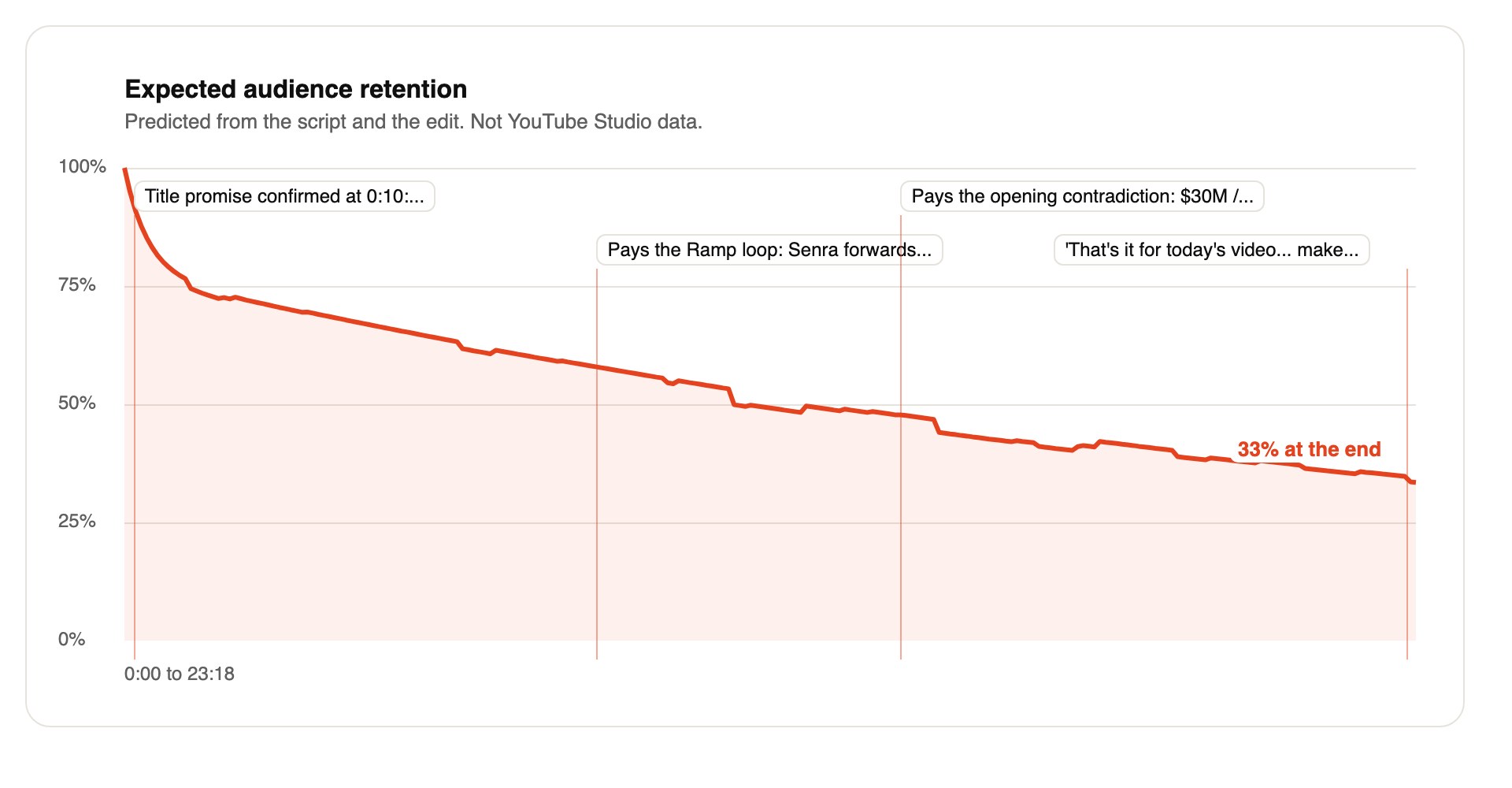
We do not have Nic’s YouTube Studio, so there are no impressions, no click-through rate (the share who clicked), no traffic-source split and no real retention graph.
The retention card above is a model, built from 41 script and edit events. It predicts 83.2% at 30 seconds and 33.5% at the end, but that is a guess, not his data.
Also out of sight:
- Which videos suggested this one, since there is no traffic-source data
- The exact minute of the title change, because vidIQ logs when it saw a title
- Whether Nic pushed it through his newsletter or main channel before 6 October, which I did not check
- The real price, since $100 million is the video’s figure and no source confirms it
Studio impressions and click-through rate by hour for 4 to 7 October, split by title, would settle most of it.
What I Would Do With an Old Story
If I were making a video on a story that is already six months old, I would do five things:
- Pick a subject with a big YouTube audience of its own, and an angle your own job lets you explain better than the news
- Put the famous party and one big number in the title, and call the subject something small
- Show the pair of numbers that should not fit together in the first 25 seconds, with the real source on screen
- Plant one named callback early, and pay it by name later
- Write down the exact minute you change a title, so the effect can be read
I would start with the last one this week. It costs nothing, and without it you cannot tell if a swap worked.
My verdict is that this is a good pattern to test, not a proven recipe, and I think the next uploads decide it.
If you want the next breakdown when it goes up, the Breakdown Theory newsletter is where I send it.